
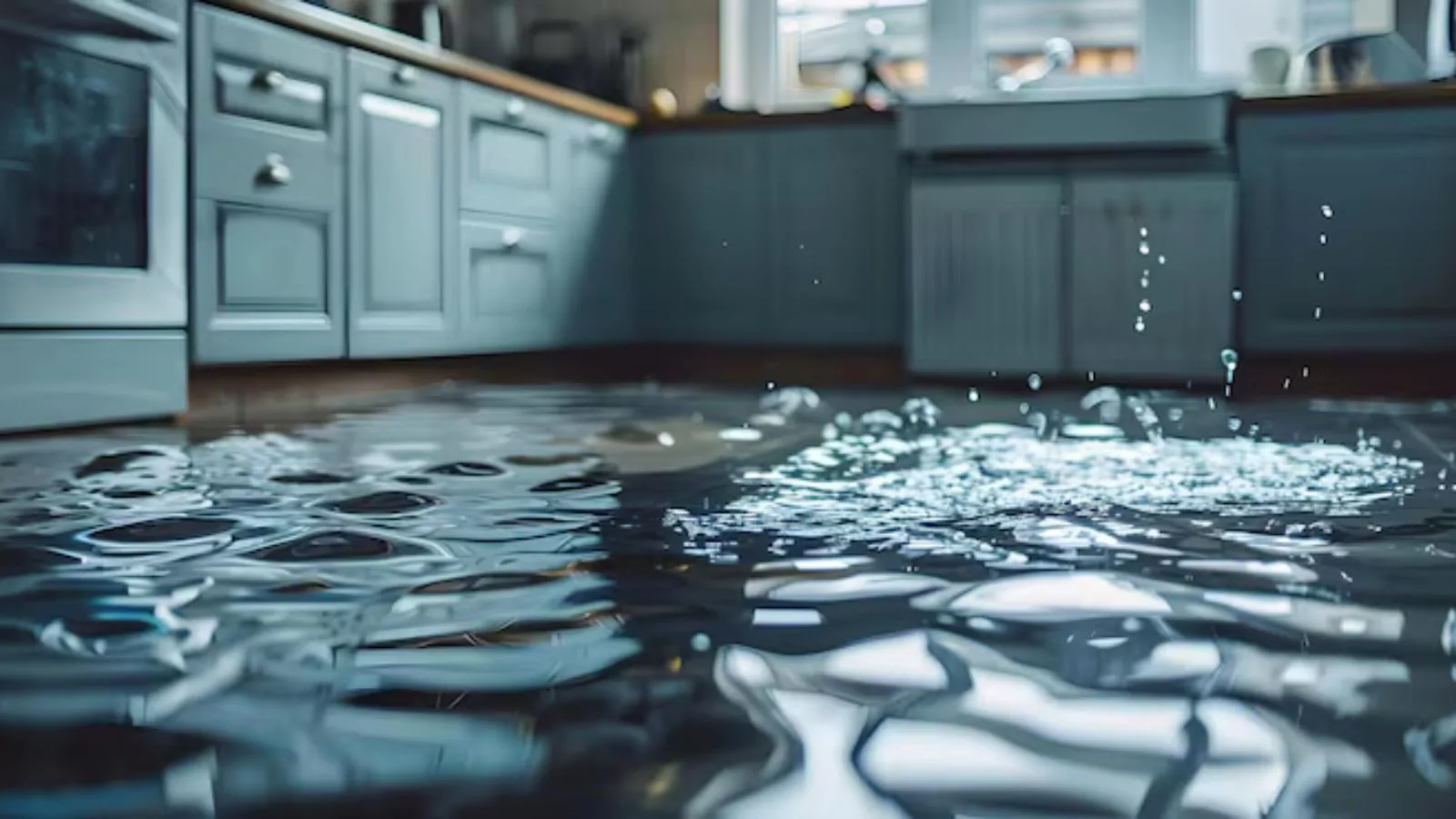
Water mitigation is the work done to stop a water loss from getting worse. It starts with safety and the source, moves through removal and drying, and ends with readings that show the structure is dry. Knowing the order helps you judge whether a crew is doing the job properly.
The industry reference for this work is the IICRC S500 standard for professional water damage restoration. This guide names it as the industry standard and does not claim any company here holds a certification.
Stage one: the call and the source
A good first call is short and specific. The dispatcher asks what the source is, whether it has been shut off, how far the water has spread and whether anyone is at risk. Those answers decide what to send and how to advise you while the crew is on the way.
Your part is simple. Stop the source if it is safe to reach, keep clear of wet outlets and appliances and move valuables to a dry spot. Never step into standing water near a panel or an outlet.
Stage two: inspection and categories
On site the crew checks safety first, then finds the edges of the wet area. Moisture meters read wood and drywall, and a thermal camera shows cool, wet areas behind surfaces. This tells the crew how far water traveled, and it is the baseline for everything that follows.
The water is also classified. Category 1 water comes from a clean source such as a supply line. Category 2 carries some contamination, such as washing machine discharge. Category 3 is grossly contaminated, such as sewage or flood water. The category decides what can be dried and what must be removed.
| Category | Typical source | What it changes |
|---|---|---|
| Category 1 | Supply line, tank overflow | Most materials can usually be dried |
| Category 2 | Dishwasher or washer discharge | Porous materials are examined closely |
| Category 3 | Sewage, river or ground flood water | Porous materials are removed and areas sanitized |
Water loss in progress?
Call the 24/7 line and the crew can be routed to you.
Stage three: extraction
Standing water goes first, with pumps and extraction units. Drying equipment cannot do this job, because it handles moisture in air and materials, not a layer of liquid. The water extraction page describes this stage in more detail.
Stage four: removal of what cannot be saved
Some materials will not dry back to a sound state. Wet carpet pad, saturated insulation and drywall that has swollen or crumbled are common examples. The crew removes them so that air can reach the cavity and the loss does not spread into framing.
A good scope explains what was removed and why. If something was cut out, you should be able to see the reading that led to the decision. Scope and price are laid out before work starts, so ask for that conversation if it has not happened.
Stage five: drying
Air movers push air across surfaces, and dehumidifiers pull moisture out of the air so it can keep drying the structure. Specialty methods handle wet floors and wall cavities when ordinary airflow is not enough. The structural drying page explains the equipment.
The crew returns to take readings, usually daily, and adjusts equipment as areas reach their dry goal. Equipment that runs without readings is a warning sign, because nobody can then say when the job is done.
Stage six: monitoring and sign-off
- Daily moisture readings compared to the dry standard for each material
- Equipment moved or removed as each area dries
- A written record of what was removed, dried and measured
- A final set of readings showing the structure is at its dry goal
Mitigation ends when the building is dry. Rebuilding is a separate stage, and it may be done by the same company or by another contractor you choose.
Setting expectations with the crew
Ask the crew lead three questions on the first visit. What do you expect to remove, how many days of drying do you expect and what would change that plan? A clear answer tells you the crew has read the loss. A vague one tells you to ask again after the readings are in.
Ask also where equipment will sit and how it is powered. Drying equipment draws power, and a crew should tell you whether it needs a dedicated circuit so a breaker does not trip while you are out. A tripped breaker can stop a whole drying plan overnight.
What you should receive at the end
- A written scope that lists what was removed and what was dried
- Daily moisture logs with dates and locations
- Photos of the affected areas before and after removal
- A record of when equipment was placed and removed
- Notes on anything the crew suggests checking later
These records matter to your insurer and to a future buyer. Ask for copies in a format you can store, and keep them with your house papers.
Common questions during mitigation
Owners often ask whether they can stay in the house while equipment runs. In many cases they can, although the noise and the warmth from dehumidifiers make some rooms hard to use. Ask the crew which rooms are safe to use and whether anyone with breathing problems should stay elsewhere.
Another common question is whether the equipment can be turned off at night. Usually it should stay on, because stopping it lets moisture settle back into materials. If the noise is a problem, tell the crew, who may be able to adjust placement or equipment.
Owners also ask what to do with belongings. Move small items out of the wet area, keep papers and electronics dry and list damaged contents for your insurer. The crew can advise on what can be cleaned and what cannot.
How this plays out around Braselton
The town's 2020 comprehensive plan finds that most Braselton homes went up in the 2000s or later and that nearly all housing is single-family. Newer houses often have engineered flooring, finished lower levels and long supply runs, which shapes how the crew reads a loss.
Calls also come from nearby cities with their own governments, including Hoschton and Oakwood. When rebuilding needs a permit, ask the building department that covers your address.
Questions people ask
How long does water mitigation take?
It depends on the source, the materials and the amount of water. Extraction is quick, and drying commonly takes several days. Daily readings show progress.
What is the difference between mitigation and repair?
Mitigation stops the damage and dries the structure. Repair rebuilds what was removed.
Does mitigation need a permit in Braselton?
Drying usually does not, but rebuilding can. Ask the building department that covers your address.
Can I start mitigation myself?
You can stop the source and move belongings. Extraction and drying need equipment, and wet materials need a proper assessment.