
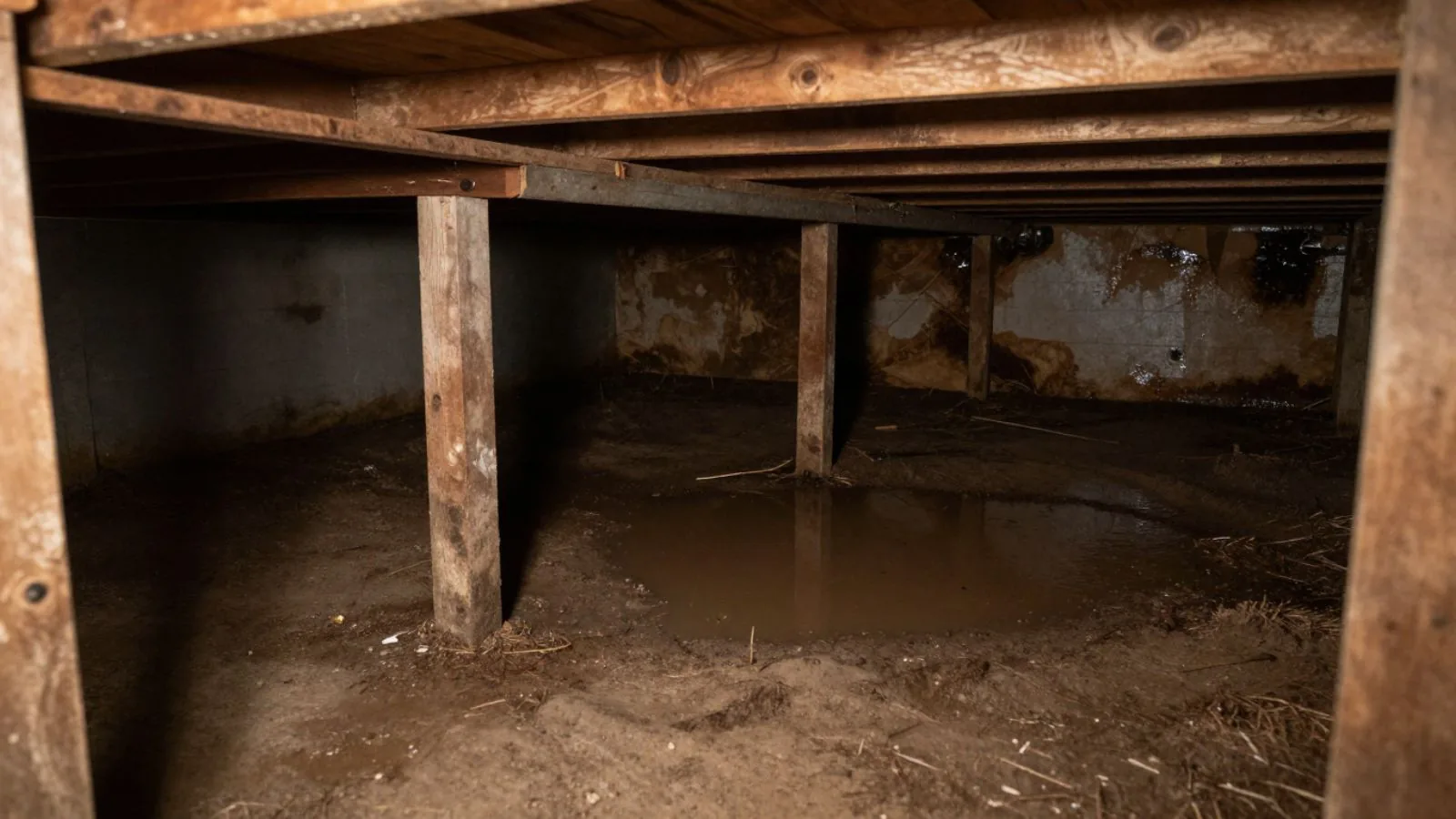
Water in a crawl space is easy to miss because nobody looks there, and it keeps working on joists, insulation and subfloor while the living space looks fine. If you find water under your house, call the 24/7 line and stay out of the space until it is safe.
Crawl space water damage cleanup is about the void under a raised floor: standing water, wet soil, damp insulation, a vapor barrier that has failed and floor framing that has absorbed moisture. It is different from a basement, which is a finished or usable room, and from a slab, which has no space at all.
First steps when you find water under the house
Do not go into a crawl space with standing water if any wiring, a furnace, or a water heater is down there, because live equipment and water are a hazard. Look from the access door with a flashlight, take photos and check whether the water is clear or dark and smelly.
Shut off the main water valve if a supply line is the likely source. If rain or irrigation is the cause, the source may stop on its own, but the water will not leave. Call the line and describe what you see.
What puts water in a crawl space
- A split or loose supply line or drain under a bathroom or kitchen
- A failed water heater or HVAC condensate line that drains below the floor
- Rain or surface runoff entering through vents or low foundation walls
- An irrigation line or sprinkler that backflowed or broke next to the foundation
- A high water table after prolonged rain that seeps through the soil
Callers often describe water in a crawl space after an irrigation backflow or a broken line, and some find out only when a buyer's inspector crawls under the house.
Water under the floor?
Call the line and describe what you see from the access.
Hidden damage in the void
Insulation holds water against the floor framing like a sponge, and a vapor barrier laid over wet soil traps moisture. Joists and subfloor take on water slowly, and sometimes the first sign upstairs is a floor that feels spongy or squeaks, or a musty smell that rises through the vents.
Crews inspect framing with a moisture meter and a camera, so conditions are recorded before anything is removed. Wood that is stained but still sound can usually be dried. Soft or crumbling wood is a structural issue and needs a builder's judgment.
How the cleanup is done
Extraction
Standing water is pumped out and wet soil surfaces are exposed.
Removal
Saturated insulation and a failed vapor barrier are removed, since they hold water against the floor.
Drying
Air movers and dehumidifiers dry the framing and subfloor from below and above.
Checks
Readings are taken again until the framing is at normal levels, then the space is ready for repairs.
Crawl spaces in Braselton homes
Foundation types vary across Braselton, since the town has subdivisions, historic houses near downtown and newer homes. Some are on slabs, some have basements and some have crawl spaces. Your property record or a plumber can tell you which you have.
Historic Downtown Braselton has older buildings, and the 2020 comprehensive plan describes the area as the town's largest concentration of historic resources. Whatever the building age, the condition of the vents and the vapor barrier is worth a look when a loss occurs.
Scope and price in a crawl space
Expect a plain talk about scope and price before work begins. The size of the space, how much insulation and barrier must come out, the depth and spread of water, access to the space and the drying time are the main factors. Tight access can add labor.
Insurance and related work
Coverage depends on the cause. Sudden water from a broken line is often covered. Seepage from groundwater and surface flooding is usually treated as flood and falls outside a standard policy. Check your policy and keep photos of the water and the failed part.
Where flood water is the source, the flood damage restoration page applies. If the water came from a supply line above, see burst pipe water damage. For the drying step, structural drying explains equipment.
Crawl space calls are welcome from Braselton, Chestnut Mountain and the other nearby towns.
Questions people ask
Is the line open for crawl space water on a weekend?
Yes. Nights and weekends are covered for new water losses such as a split line, a failed heater or water that came in after heavy rain.
Is it safe to go into a flooded crawl space?
Not if wiring, a water heater or HVAC equipment is down there. Look from the access, take photos and let the crew handle it.
Does wet insulation have to be removed?
Usually yes. It holds water against the framing and rarely dries well in place.
Do you install vapor barriers or waterproofing?
No. This service dries and cleans after water. Waterproofing and encapsulation are separate trades, and any company you consider should explain which services it offers.
Can wood joists be saved after water?
Often yes, if the wood is still sound. The readings and a closer look decide. Soft or crumbling framing needs a builder's opinion.