
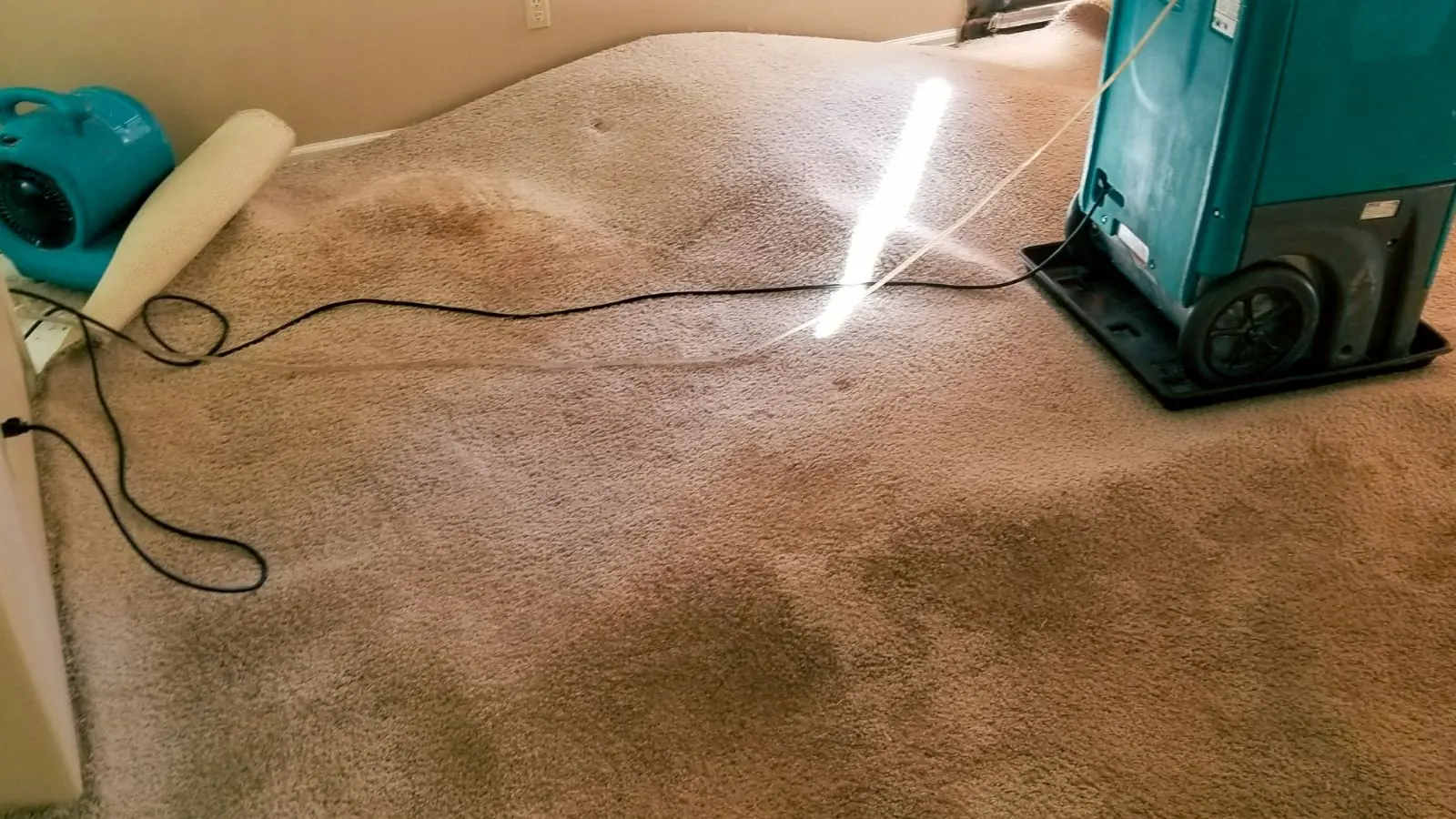
Structural drying is what turns a cleaned-up water loss into a dry building. Our line is open 24/7 for new water losses, and this page explains what happens after the standing water is gone.
Walls still damp or smelling musty days after the leak?
People rarely search for the trade name. They search for damp walls that never dry, carpet that stays cool and soft, a basement that smells stale or a room where the air feels heavy. Those are symptoms of moisture still sitting in the structure after the water on the surface has been cleaned up.
Left alone, that moisture swells drywall, lifts trim, warps floors and gives mold what it needs. The fix is structural drying and dehumidification, which is controlled drying of the building with equipment and measurement, not just ventilation.
What the equipment does
| Equipment | Job | Where it goes |
|---|---|---|
| Air movers | Push air across wet surfaces to move moisture out of materials | Along walls, across floors and under cabinets |
| LGR dehumidifiers | Pull moisture out of the air so materials keep releasing it | In the center of the wet area with doors closed |
| Moisture meters | Read moisture content in drywall, wood and concrete | Every day on every wet material |
| Thermal camera | Shows cool damp areas behind finished surfaces | During the first assessment and spot checks |
| Extraction units | Remove bulk water before drying begins | On the first visit |
Damp walls or floors after a leak?
Call the line and describe what is still wet.
Moisture mapping and how drying is tracked
Moisture mapping is a drawing of the wet area. A tech takes readings across walls and floors and records them on the first visit. The same points are read again on later visits, so the numbers show whether the area is drying or stalled.
Drying is finished when the readings match a dry reference reading from similar unaffected materials in the same building. That is the S500 approach, and it is why a company can tell you what the target is. A surface that feels dry to the hand is not the test.
The water mitigation step
Water mitigation is the first-response phase: stopping further damage by extracting water, removing materials that cannot be saved and starting the drying. The homepage explains the whole process in order. Structural drying is the long middle of it, and it is where most of the time goes.
How long drying takes
Drying time depends on the materials, the volume of water and the conditions in the home. Light carpet and thin drywall dry quickly. Hardwood, concrete and thick framing hold moisture longer. A typical job takes several days with daily checks, and large or old losses take longer.
Equipment is placed for the job and removed when the readings are right. The crew does not rent it out for you to run. That is a different arrangement from the one some callers imagine, and it keeps the readings and the setup under the same hands.
Drying in Braselton homes
Georgia's humid summers matter here. When outdoor air is warm and wet, opening windows does not dry a house, and the dehumidifier does the real work. Closed doors and controlled airflow keep the equipment effective.
Drying is used on every kind of loss. See ceiling water damage for wet insulation and drywall overhead, carpet water damage for pad, and basement water damage for concrete and framing that stay wet.
What sets the number of drying days
Before any work begins, scope and price are reviewed with you. The number of rooms, the materials, the number of drying days, the equipment needed and the number of monitoring visits are the main factors. A job that reads dry in three days is smaller than one that stays wet for a week.
Insurance
Drying logs, moisture readings and a record of equipment days help document a covered loss. Keep the paperwork from the crew with your photos, and ask your insurer what it expects to see.
Drying crews travel from Braselton to Oakwood, Pendergrass and the rest of the nearby towns.
Questions people ask
How long does structural drying take?
Several days is typical for a moderate loss, and longer for large losses, thick materials or concrete. Daily readings show progress, and the job ends when readings match the dry reference.
Can I rent air movers and dehumidifiers from you?
No. Equipment is set and monitored by the crew as part of the job and is not rented out.
Why not just open the windows and run fans?
In humid weather, outdoor air adds moisture. Dehumidifiers pull water out of the air and fans alone cannot finish the job.
What is a moisture map?
A record of moisture readings across wet areas, taken on the first visit and repeated, so you can see the drying progress.
Does drying prevent mold?
It removes the moisture mold needs, but no company can promise mold will never appear. Fast and complete drying lowers the risk.