
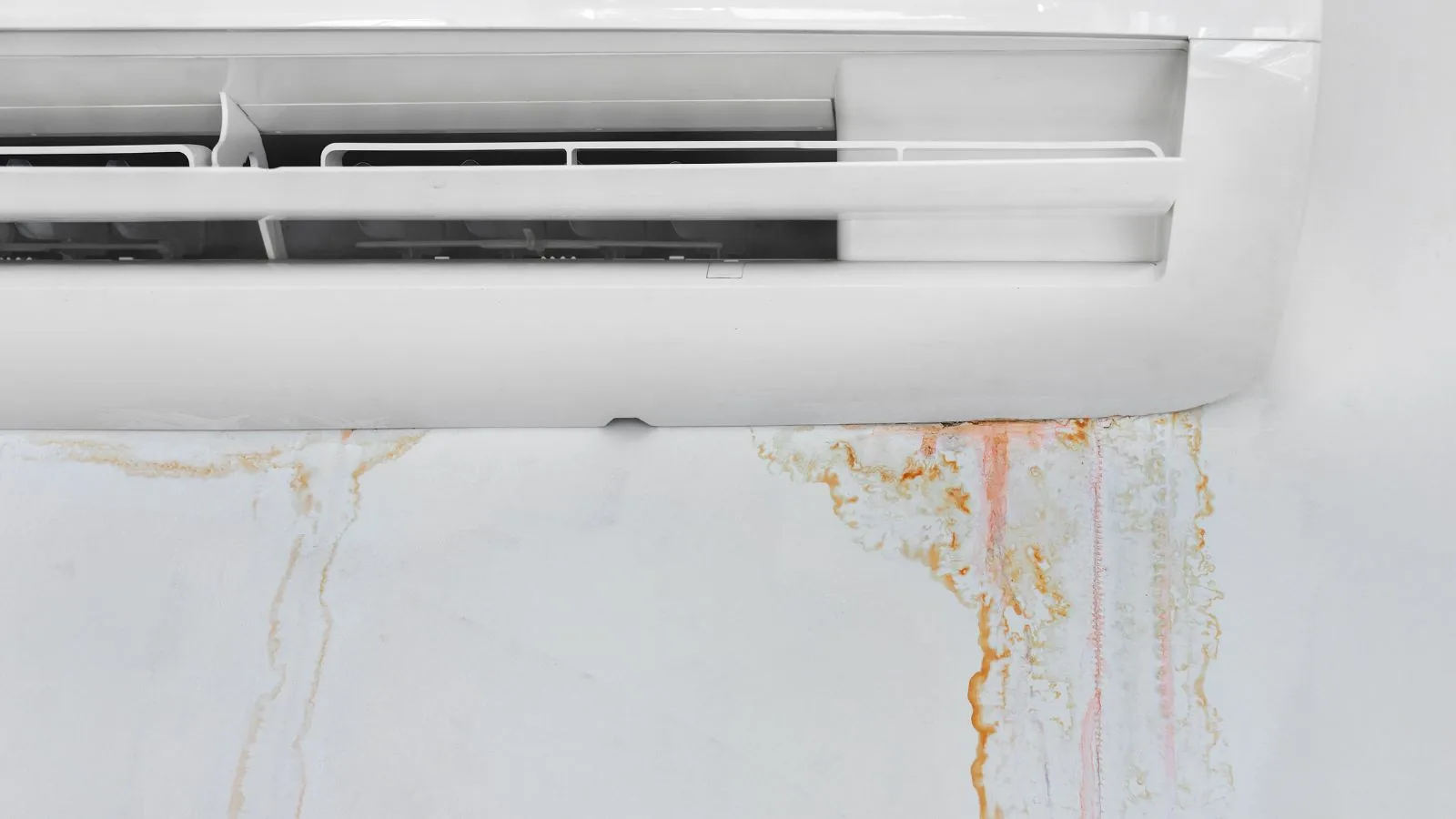
Water from an air conditioner usually shows up slowly, as a stain on a ceiling, a damp closet or a floor that has started to cup. Our line is open 24/7 if you find water, and the first thing to do is switch the system off.
AC leak water damage comes from condensate. A cooling coil pulls moisture out of the air, and that water must drain through a line and a pan. When the line clogs or the pan fails, the water goes where gravity sends it, and in a house with the air handler in an attic or a closet, that is into drywall and flooring.
First steps when the AC leaks
Turn the thermostat to off so the system stops producing more condensate. Place a towel or bucket under any drip, and look for a float switch or a drain line that is visibly backed up. A technician can clear the line and test the pan, and that repair belongs to an HVAC company.
Photograph the stain, the pan and the line before anyone touches them. Then call the line if there is wet drywall, damp flooring or standing water. A small drip caught quickly is a short drying job, while a leak that ran for weeks needs a closer look.
Where the water goes
- Closets that hold an air handler, with water soaking carpet and wall bases
- Ceilings below an attic unit, which show a brown ring that grows slowly
- Wall bases near a mini-split or an air handler in a utility room
- Hardwood or engineered floors that cup after a long damp period
- Insulation around the condensate line, which holds water for a long time
Because condensate leaks are slow, the damage is often larger than the first stain suggests. Moisture meters and a thermal camera show how far the water traveled.
Damp closet or stained ceiling from the AC?
Call the line and describe where it is wet.
Cases we see
A common call involves a closet next to the air handler where the carpet and pad are soaked and a musty smell is starting. Another involves hardwood cupping a few feet from a condensate line that backed up while the owners were away.
For floors, see hardwood floor water damage and carpet water damage. If the water came through a ceiling, the ceiling water damage page applies.
AC leaks in Braselton homes
In a humid climate like north Georgia's, a cooling system runs for many months of the year, so condensate flows for a long season. An air handler in an attic over bedrooms or in a hall closet can send water to finished materials fast once a small clog forms.
A leak from an upstairs or attic unit tends to reach the ceiling below, and homes left empty for part of a season are the most likely to go unnoticed until the stain is large.
How the cleanup works
The crew maps moisture, removes carpet pad or wet baseboard that cannot dry, and sets air movers and a dehumidifier. Insulation that held the water is removed and replaced by the repair crew. Readings are taken again until materials reach normal levels.
If mold is already present, a different set of steps applies, and the work depends on what the readings and a visual check show. This site does not offer mold remediation, so ask any company you consider about its mold services and the standard it follows.
What changes an AC leak job
The dispatcher and crew lead explain scope and price at the start. The duration of the leak, the rooms involved, the flooring type, the amount of insulation and drywall that is wet and whether a ceiling below is affected drive the figure. Because the water is usually clean at the start, caught early the job can stay small.
Insurance
Policies differ on gradual leaks. Many treat a sudden failure as covered and a leak from years of poor maintenance as excluded. Ask your insurer and keep the HVAC technician's notes on the cause, since they can help establish what happened.
A clogged drain line can show up anywhere from Braselton to Oakwood, and the same line takes the call.
Questions people ask
What causes an AC unit to leak water in the house?
A clogged condensate line, a rusted or cracked drain pan, a failed float switch or a frozen coil that melts can all send condensate out of the system. An HVAC technician identifies which one.
Can hardwood floors recover from a slow AC leak?
Sometimes. If boards have only started to cup, drying may flatten them over time. Severe cupping and buckling usually need replacement.
Should I turn the system off?
Yes, if you see water. The thermostat off position stops more condensate and keeps the leak from getting bigger until the line is cleared.
Will insurance cover AC leak damage?
Many policies cover water damage from a sudden condensate overflow. Gradual leakage over a long time is commonly excluded. Ask your insurer.
Do you clear the condensate line?
No. An HVAC company clears the line and tests the pan. We handle the wet materials and drying.