
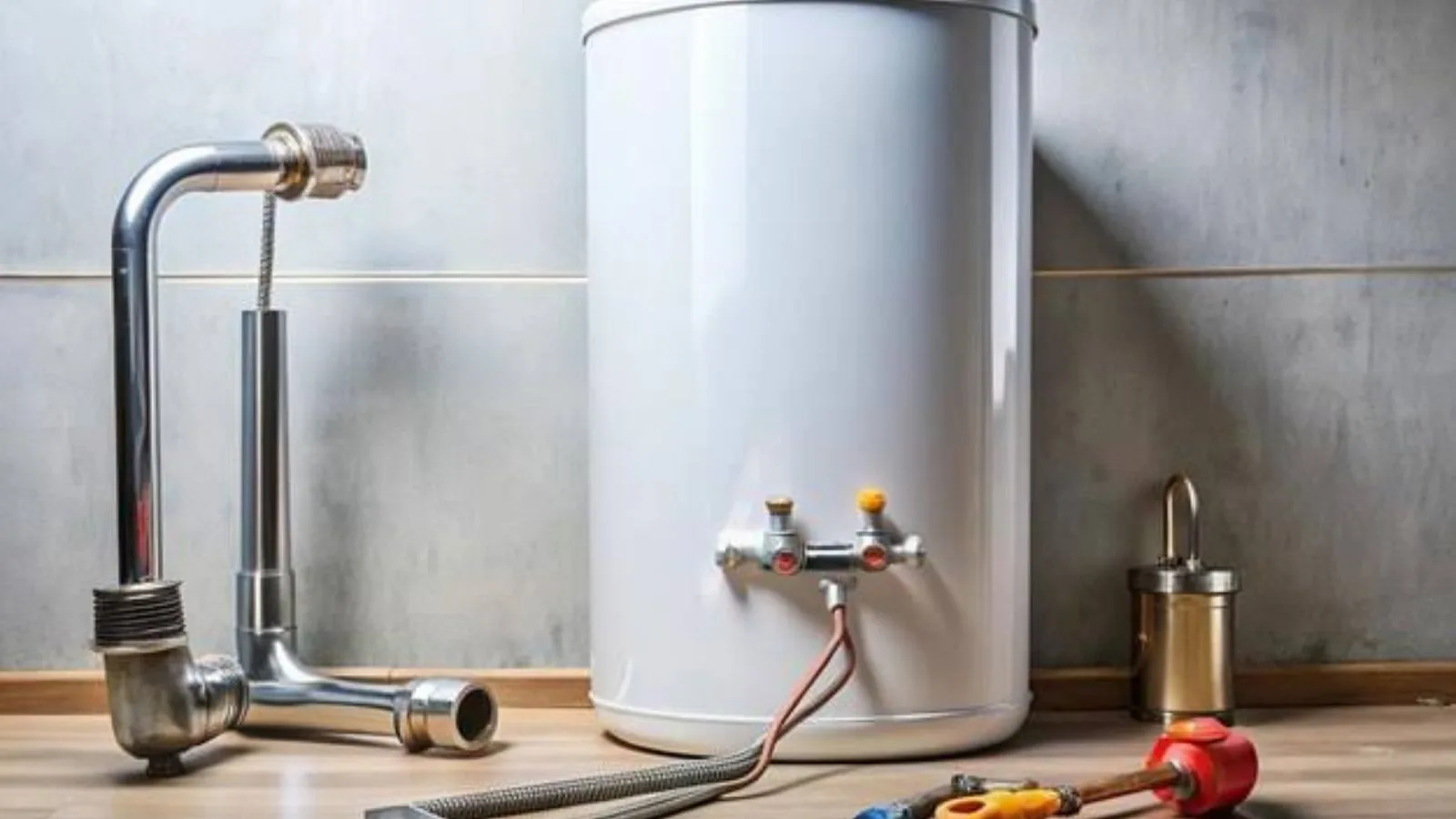
A water heater that leaks or bursts is an emergency because a full tank empties onto the floor quickly and keeps refilling from the cold supply. Our line is open 24/7, so call as soon as you have shut the heater down.
This page is about the water damage a failed heater leaves behind: wet floors, soaked drywall, wet insulation and, in some homes, water on the level below. Replacing the heater is a plumber's job. Our work starts once the unit is off and the supply is closed.
Water heater emergency: what to turn off
Cut the fuel
Turn an electric heater off at its breaker only if the panel is dry and you can reach it safely. For gas, turn the control to off and close the gas valve if you can do so without entering water.
Close the cold line
Shut the cold water inlet valve above the tank. If it will not turn, close the main water valve for the house.
Stay out of standing water
Water near a heater, a panel or a gas line is hazardous. Do not step into it with the power live.
Call the emergency line
Tell the dispatcher where the heater is, how much water is out and which rooms are wet.
Where the water goes
A tank in a garage sends water across the slab and under the wall base. A unit in a utility closet pushes water into the carpet and the baseboards of the next room. A heater in an attic or on an upper floor can drop water through the ceiling below, which makes this a ceiling water damage problem too.
Because the water is clean at first, the loss starts as Category 1. If it sits, or if it passes through dirty materials, it can move to a higher category. Early extraction keeps the loss on the simple side.
Heater tank emptied onto the floor?
Call the 24/7 line once it is shut off.
Why heaters fail
- Corrosion of the tank over time, which eventually opens a seam
- A failed pressure relief valve or drain valve that starts to drip, then spray
- Sediment buildup that overheats the tank and stresses the lining
- Loose or worn connections on the supply and outlet lines
- A failed drain pan or overflow line that was hiding a slow leak
A small slow leak that ran for weeks can have rotted the floor around the heater without any big event. That kind of damage looks different from a burst tank, and the cleanup includes checking the subfloor.
Heaters in Braselton homes
Water heaters sit in garages, in closets off the laundry and in attic spaces. Garage units are the easier losses, because a concrete floor lets water spread out where it can be reached. Closet and attic units are harder, because the water has carpet, drywall and a ceiling below it to travel through.
Sediment in any tank is a normal maintenance issue and one reason older units fail, whatever the water source. The Town of Braselton Water System, which serves much of the town from wells and county connections, can tell you about water quality in your area.
How the cleanup is done
Crews extract the water, check the rooms around the heater with moisture meters and a thermal camera, and remove wet materials that cannot dry in place, such as saturated drywall bases and carpet pad. The rest of the area is dried with air movers and dehumidifiers.
When the structure reads dry, a repair crew can replace drywall and flooring. Drying equipment and monitoring are explained on the structural drying page.
What changes a water heater job
You will know the scope and price before the first piece of equipment goes in. The amount of water released, the number of rooms it reached, the flooring type, the age of the leak and whether a ceiling below was involved are the main factors. A clean release caught in an hour is smaller than a slow leak that rotted a subfloor.
Insurance
A sudden tank failure is often treated as a covered event, but a leak from long neglect often is not. Check your policy, take photos of the unit and the wet area and keep the failed parts if you can. The adjuster may want to see them.
Heater calls from the Hall County side, such as Oakwood and Flowery Branch, and from Jackson County towns all go to the same line.
Questions people ask
Can I call when a heater leaks overnight?
Yes, the line never closes. If a heater lets go at night, shut it down and close the cold supply, then call and describe the water.
Do you replace the water heater?
No. A plumber replaces it. We clean up the water damage, dry the structure and remove wet materials that cannot be saved.
Is it safe to turn off the breaker for a leaking heater?
Only if the panel is dry and you can reach it without stepping in water. If not, leave it and call your power provider or an electrician.
How much water is in a typical tank?
Residential tanks commonly hold forty to eighty gallons. A seam failure can release most of that in a short time.
Will my homeowners policy pay for a failed water heater?
Many policies cover water damage from a sudden tank failure, but not the heater itself or damage from long neglect. Ask your insurer.