
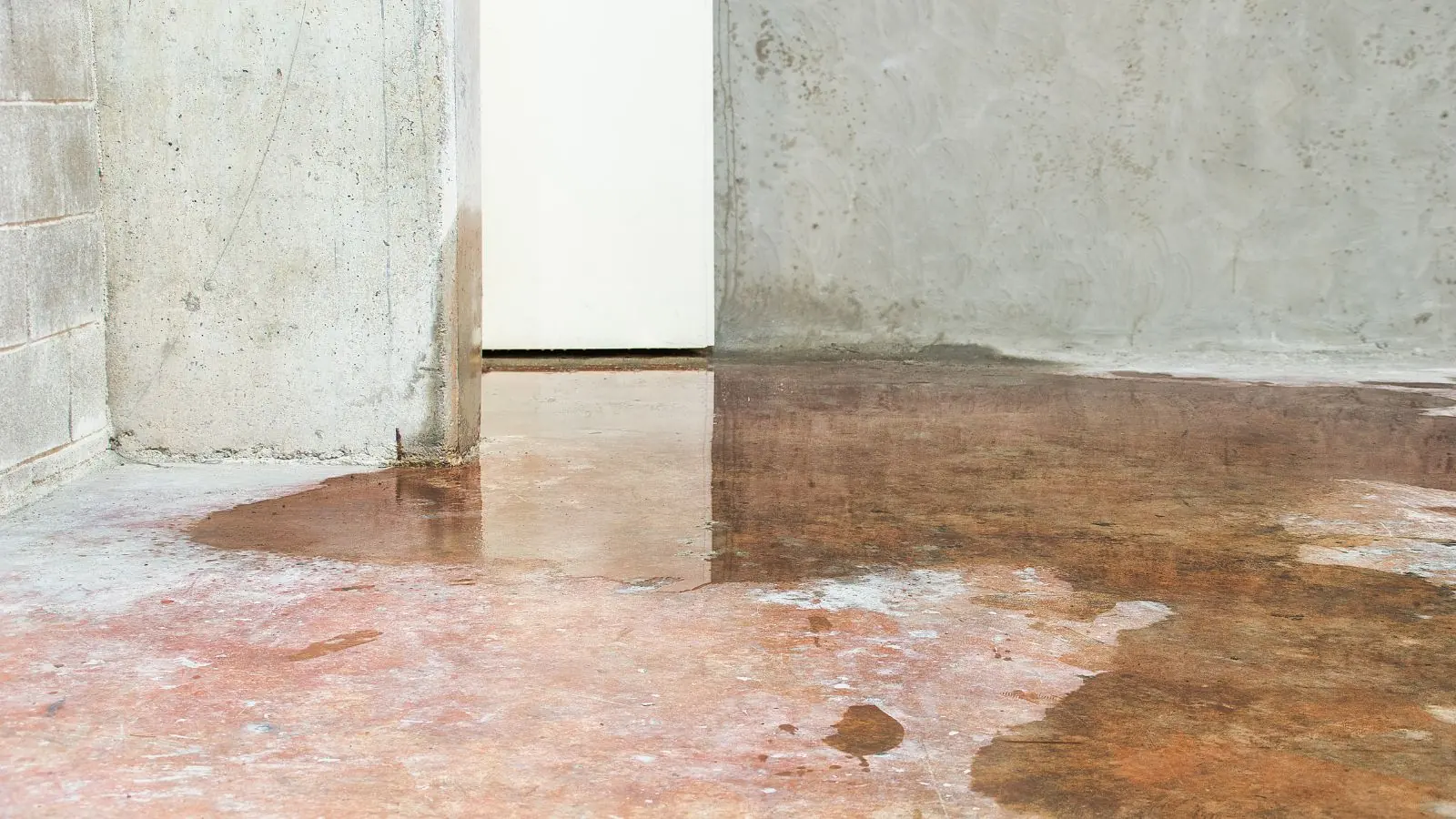
A slab leak is a leak in a pressurized water line that runs under or through a concrete foundation, and it becomes an emergency when the water reaches your flooring. Our line is open 24/7, and the first step is to shut off the water at the main.
Floor feels warm or the meter keeps moving? Check for a slab leak
Most people do not search for slab leak cleanup. They notice a warm patch on a tile or hardwood floor, the sound of running water when nothing is on, a meter that keeps turning with every fixture off, or a water bill that jumped. Damp carpet along one wall or a musty smell in a room with no obvious source can point to the same thing.
If you see these signs, close the main valve and check the meter. If it stops, the leak is on the house side. A plumber with leak detection equipment then locates the line, and the water damage crew handles the wet materials that follow.
Slab leak emergency: what to do right away
Shut off the water at the main and call the line if water is on the floor or in the walls. Keep rugs and furniture off wet areas, and take photos of the damp spots and the meter. Hot water leaks can feel warm underfoot, and standing water near an outlet or appliance is a hazard, so keep clear.
Leave concrete and plumbing repairs to the right trades
Breaking into a slab is a plumbing and structural job. Do not cut into concrete yourself, and do not run the system while you wait. Our work is the damp flooring, drywall and cavity drying around the leak.
Wet floor over a slab leak?
Close the main and call the 24/7 line.
What a slab leak does to a home
Water from a line under the foundation rises through cracks and joints and spreads sideways under flooring. It soaks the bottom of wall framing and the drywall bases first, and it can lift floating floors, cup wood and loosen tile. Because it comes from below, the damage tends to be hidden until the water has traveled a distance.
Moisture meters, a thermal camera and sometimes a relative humidity probe are used to find the full extent. Concrete holds moisture, and a slab that has been wet for a long time dries slowly.
How the cleanup works
- Extraction of any standing water and removal of saturated carpet and pad
- Pulling wet baseboards and cutting drywall at the base where the readings call for it
- Lifting or removing flooring that cannot dry in place, such as laminate and some wood
- Air movers and dehumidifiers to dry the slab surface, framing and cavities
- Moisture readings repeated until the structure reaches normal levels
Once the slab and the wall bases read dry and the plumber has repaired the line, a repair crew can replace flooring and drywall. Drying details are on the structural drying page.
Slab leaks and Braselton homes
Not every Braselton home sits on a slab. Some have basements or crawl spaces, and some have a mix, so the first question is what your foundation is. The county assessor record for your property or your closing documents usually say, and a plumber will know on sight.
If your house has a crawl space instead, a leak in the supply line is a different problem and is covered under crawl space water damage. For a leak that is visible at a wall or a fixture, burst pipe water damage is the page that fits.
Scope and price for a slab leak
Scope and price are reviewed with you before anything is removed. The length of time the leak ran, the number of rooms with wet flooring, the flooring type and whether wall bases are wet drive the figure. Concrete dries slowly, so the number of drying days is a large factor, and a leak found early is far smaller than one discovered after a high bill arrives.
Insurance and slab leaks
Policies treat slab leaks differently, and the wording on underground piping and on gradual leakage matters. Some cover the resulting water damage but not the cost of reaching and fixing the line, and others exclude long-running leaks. Ask your insurer before work starts, and keep the plumber's report with your photos.
Slab leak calls come in from Braselton and the towns up and down SR 53 and US 129.
Questions people ask
What if I notice the meter running late at night?
Yes, at any hour. If you find water on the floor or a running meter at night, shut off the main and call.
How do I know whether I have a slab leak?
Warm floor spots, the sound of running water with fixtures off, a meter that keeps moving and an unexplained jump in the water bill are the usual signs. A plumber with leak detection equipment confirms it.
Do you find or fix the leak?
No. A plumber finds and repairs the line. We dry the structure and remove wet materials once the water is stopped.
Can flooring stay in place over a slab leak?
Some flooring can dry in place, such as certain tile. Laminate and many engineered products usually come up. The readings decide.
Does insurance cover a slab leak?
It depends on the policy. Some cover resulting water damage but not the cost of reaching the pipe, and many exclude long-running leaks. Ask your insurer.