
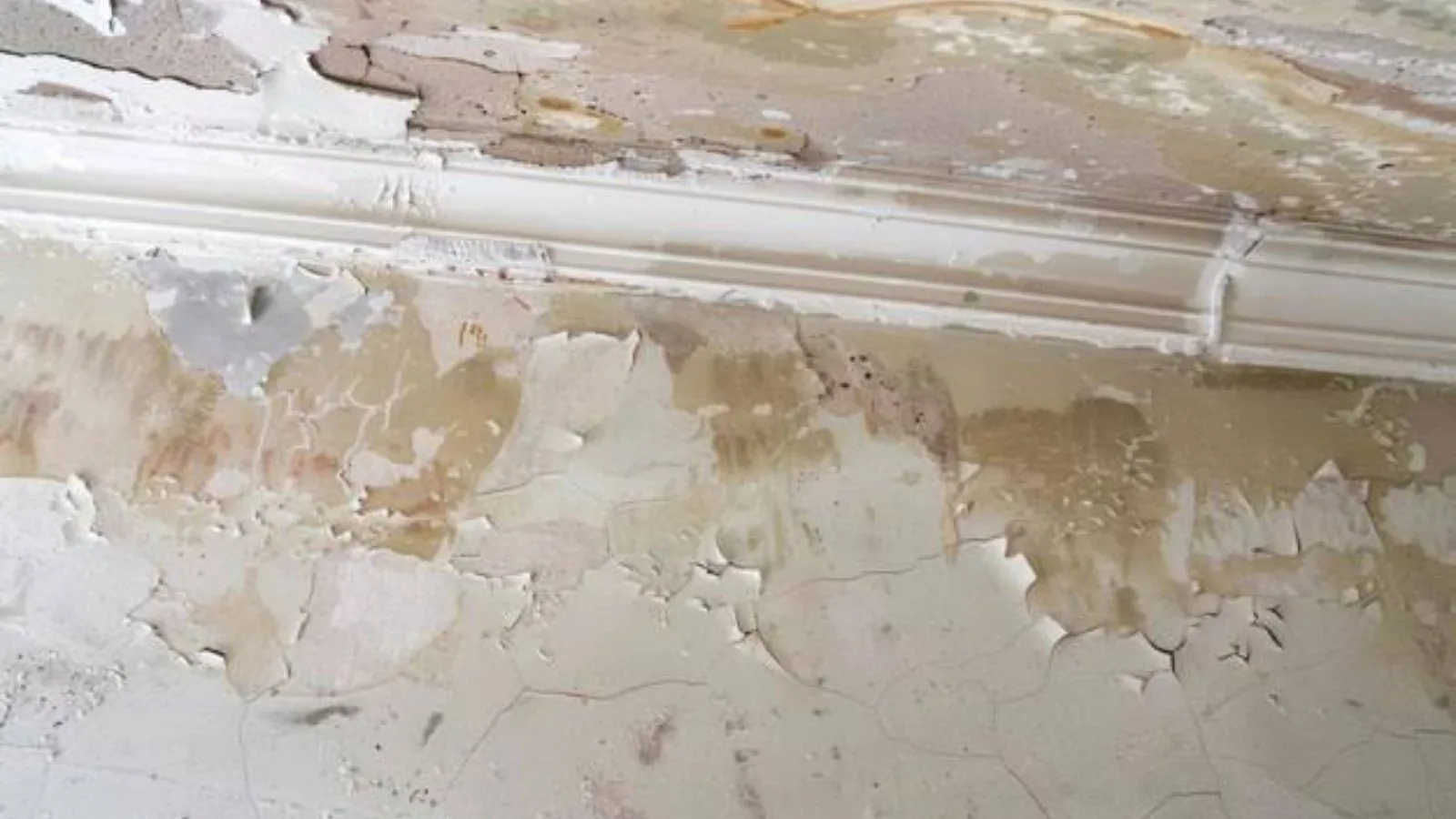
A wall that has taken on water can look fine on the outside and still be soaked inside. If you have a stain, a bubble, a soft spot or a baseboard that has started to lift, call the line, because early drying can keep more of the wall.
Wall and drywall water damage repair covers the drywall, the baseboard, the insulation and the framing inside the wall. The water came from a pipe, a roof, an appliance or a storm, and the material list is the same. Drywall is paper-faced gypsum, and it soaks up water and loses strength quickly.
Signs water is in a wall
- A stain or discoloration that grows or turns brown at the edges
- Paint that bubbles, peels or cracks along a baseboard
- A soft spot that gives when pressed, or a place where a hole is forming
- Baseboards that lift, swell or pull from the wall
- A musty smell that stays near one wall after the leak is fixed
Callers also describe a saturated wall near a master bath, a garage wall wet from outside and siding that leaked into a kitchen wall. The cause varies, and the wall tells you the water was there.
First steps
Stop the source, move furniture away from the wall and photograph the stain with a coin or tape measure for scale. Do not paint over a stain, because it hides the damage and can trap moisture. If the wall is bulging, stay clear and call.
Drywall that has been wet for more than a short time often has to come out, and insulation inside the wall may be soaked. The crew checks with a moisture meter and a thermal camera before deciding how much to cut.
Stained, soft or bubbling wall?
Call the line and describe the wall.
Drying versus removing
| Situation | Usual approach |
|---|---|
| Clean water, wall wet for a short time | Drill small holes at the base and dry the cavity with air movers and a dehumidifier |
| Wet insulation in the cavity | Remove the insulation, since it holds water against the framing |
| Drywall soft, crumbling or sagging | Cut out the wet board to a clean edge and dry the framing |
| Contaminated or old water | Remove the affected board and treat the cavity |
Drywall is cut a few inches above the wet line so the new board has a dry edge to attach to. That is called a flood cut. The crew leaves the studs in place, dries them and reads them again before anyone covers them up.
How the repair proceeds
After drying, a repair crew hangs new drywall, tapes, mud and sands the joints, primes and paints. Priming matters, because stains in the old paint can bleed through a new coat. A plain stain is not mold, but if there is mold, ask any company about the services it offers and the standard it follows.
The drying phase is explained on structural drying. If the stain is on a ceiling instead, see ceiling water damage repair. If the water started under a sink, kitchen water damage covers the cabinet side.
Walls in Braselton homes
Walls in newer houses are mostly drywall over wood framing, and exterior walls hold insulation that soaks easily. Water that runs behind siding from a window or flashing leak can sit in the cavity for a long time before it shows inside. A stain on an exterior wall after rain is worth a close look from outside.
Historic Braselton buildings may have plaster or older materials that behave differently from drywall, and a restorer should check what the wall is made of before cutting.
What changes a wall and drywall scope
You get a clear explanation of scope and price before work. The wall area wet, the insulation in the cavity, the finish and trim, the drying time and the rebuild scope are the main factors. A short run of drywall cut and dried is much smaller than several walls and a ceiling.
Insurance
A sudden leak that wets a wall is often covered. A slow leak that stained and softened a wall over a long time may not be. Photograph the wall before opening it, keep the cut-out board if you can and ask your insurer how it handles paint matching.
Wall and drywall calls come in from Braselton and the towns around it, and the dispatcher routes the crew.
Questions people ask
Can wet drywall be dried instead of replaced?
Sometimes. Clean water caught quickly may dry in place. Soft, crumbling or long-wet drywall is usually cut out.
Why cut a few inches above the wet line?
The new board needs a dry, sound edge to attach to. Wicking can carry moisture above the visible stain.
Should I paint over a water stain?
No. Painting over it hides the damage and may trap moisture. Let the wall dry and read normal first.
How do I know if insulation is wet?
A moisture meter and a thermal camera can show it. Wet insulation feels heavy and cool and does not dry well in a closed wall.
Do you repaint after drywall repair?
No. A repair or paint contractor finishes the wall. We dry the wall and remove what cannot be saved.