
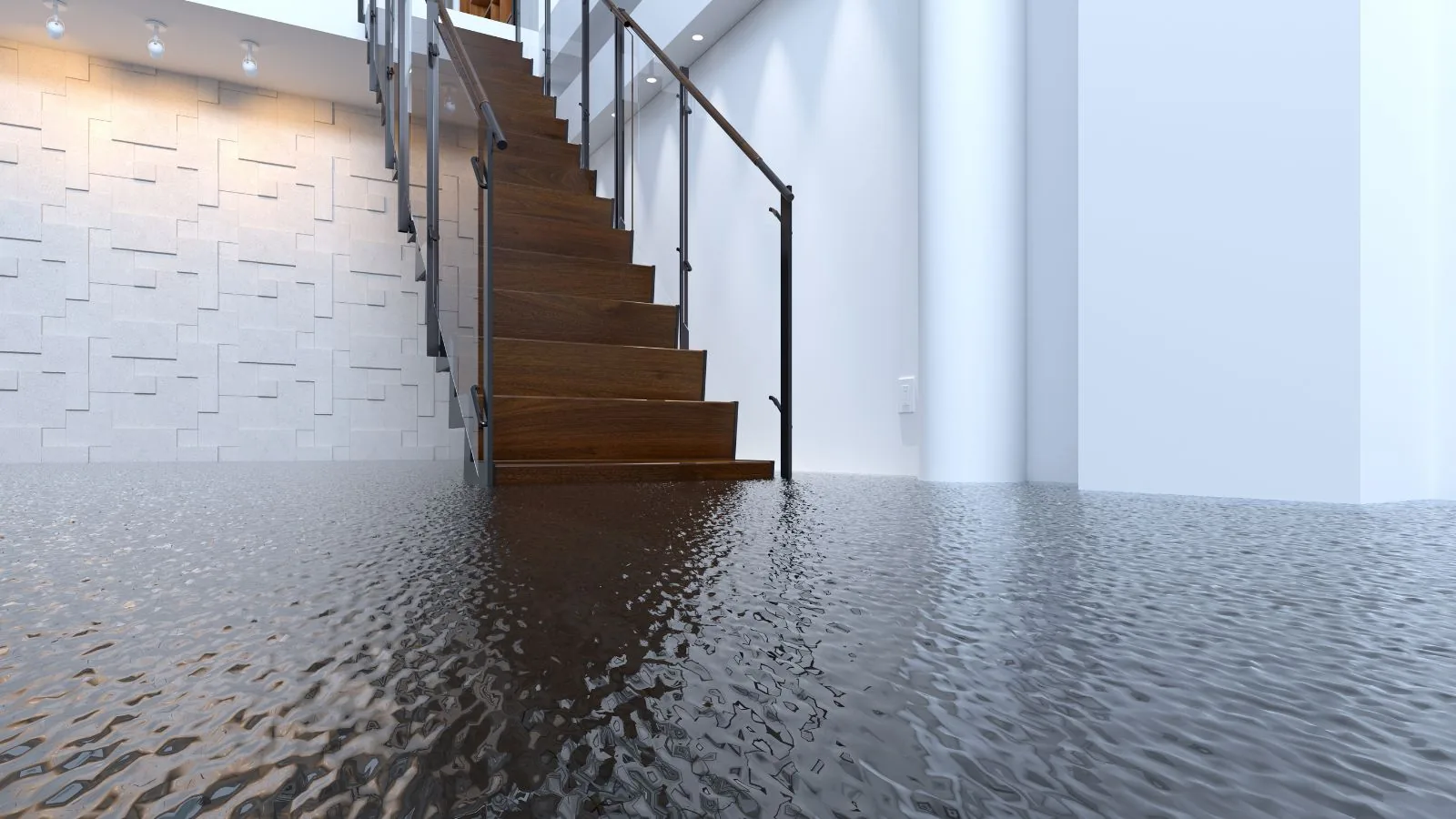
Water in a basement is an emergency because it sits below grade, soaks everything stored there and has nowhere to drain. Our line is open 24/7, so call as soon as you see it and avoid the area if the water is deep or near the electrical panel.
Basement water damage cleanup covers the room below grade: standing water, wet carpet and finished walls, stored belongings and the concrete and framing. It is different from a crawl space, which is a void, and from a main-floor leak, because water has to be pumped out and the space is harder to dry.
Basement water emergency: first steps
Do not go down if water is deep or touching outlets, a furnace, a panel or a water heater. Look from the stairs, take pictures and note the water level. If the source is a pipe, shut off the main water valve. If it is rain, the source stops when the rain stops, but the water stays.
Do not try to pump a deep basement out in one go. Removing water too fast from a flooded basement can pressure the walls and floor when the soil outside is still saturated. Careful crews take water down in stages, and the dispatcher can explain what to expect.
Electrical and gas hazards come first
If water is touching the panel, outlets or gas equipment, stay out and call the power provider or 911. Do not step into water to switch anything off.
Where basement water comes from
- Heavy rain that pushes water through walls, windows or floor joints
- A sump pump that failed or was overwhelmed
- A burst supply line or a water heater failure
- A drain or sewer backup in a lower-level bath or floor drain
- A washing machine or utility sink overflow
Callers describe water coming in after rain, a flooded and musty finished basement, and a sump pump that quit during a storm. These need cleanup, and the cause is a separate question.
Water in the basement?
Call the 24/7 line and describe the depth.
Restoration is not waterproofing
This service dries and cleans after water has come in. It does not stop water from entering in future. Waterproofing, drainage work, foundation repair and sump pump installation belong to other contractors, and any company you hire should be clear about which it provides.
If water has come in more than once, ask a foundation or drainage specialist to look at the cause, and keep the cleanup records. They help show the pattern to your insurer and your contractor.
How the cleanup works
Extract
Water is pumped out in controlled stages, and silt and debris are removed.
Remove
Wet carpet, pad, insulation and low drywall that cannot dry are cut out. Contaminated materials are bagged.
Dry
Air movers and dehumidifiers dry concrete, framing and the air. Concrete dries slowly, so monitoring continues.
Check
Readings are taken before any rebuild begins, and a written scope documents what was done.
Basements and nearby areas
Braselton has homes with basements, homes on slabs and homes with crawl spaces. Whether yours has a basement is a question for your property record. For finished lower levels, carpet and pad are covered on carpet water damage.
Rising ground water and stream overflow are flood water, handled under flood damage restoration. A sewage backup to a lower-level bath is a contamination loss, covered at sewage backup cleanup.
What sets a basement cleanup scope
Scope and price come first, then the work. The depth of the water, the category, the finished area, stored contents, the time it sat and the drying time needed for concrete are the main factors. A concrete floor with no finish dries faster than a carpeted and paneled room.
Insurance
Water that rises from the ground or comes in through walls is usually treated as flood or seepage and is often excluded from a standard homeowners policy. Sudden pipe or heater failures are different. Ask your insurer, and check whether you carry a sump pump or water backup endorsement.
Basement calls from Chestnut Mountain, Oakwood or Braselton go to the same line.
Questions people ask
Does basement flooding during a storm get a night answer?
Yes, even in the middle of a storm. Call and describe the depth of the water and where it is coming from.
Can you stop my basement from leaking in the future?
No. This service is cleanup and drying after water. Waterproofing and drainage work are separate trades.
How long does a wet basement take to dry?
Several days to more than a week, depending on finishes and concrete. Readings decide when it is done.
Why not pump the water out all at once?
If the soil outside is still saturated, removing water too fast can stress the walls and floor. Staged pumping is safer.
Does insurance cover basement water?
It depends on the source. Rain seepage and flood are often excluded, while sudden plumbing failures are often covered. Ask your insurer.