
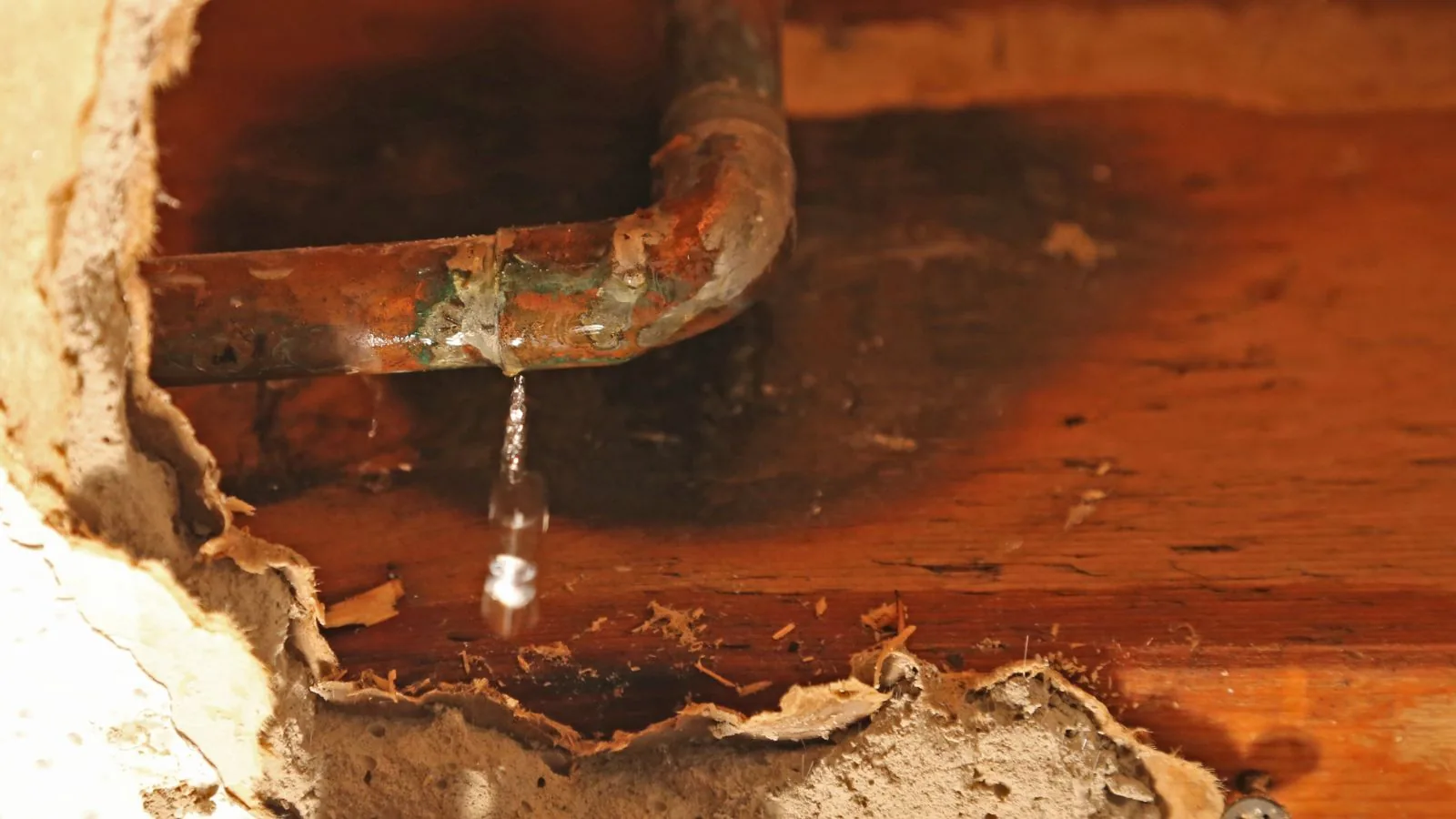
A water bill that climbs with no change in how you live is worth a closer look. A hidden leak is one explanation, but not the only one. A short set of checks at the meter can tell you whether water is moving through your house when nothing should be running.
Common reasons a bill rises
- A toilet that leaks into the bowl without making noise
- A dripping fixture that has been running for weeks
- An irrigation system that was reset or has a stuck valve
- A leak in the line between the meter and the house
- A change in the billing cycle length or a rate change
- More people in the house, guests or a filled pool
Only some of these show up as visible damage. A toilet flapper can waste a large amount of water without leaving a mark, while a leak under a slab or in a wall can leave stains long before anyone sees a puddle.
The meter test
Turn off every faucet and appliance that uses water. Make sure the ice maker, dishwasher and washing machine are idle, and that no irrigation cycle is scheduled to start. Then find the meter, which is usually in a box near the street, and look at the leak indicator or the small dial.
If the indicator is moving or the dial turns while nothing is running, water is going somewhere. Write the reading, wait a set period without using any water, and read it again. A change confirms a leak, and the size of the change hints at its scale.
Found water on a floor?
Call the 24/7 line and describe the room.
Narrowing down the location
| Check | What to do | What it suggests |
|---|---|---|
| Toilet dye test | Add a few drops of food coloring to the tank and wait | Color in the bowl means a leaking flapper |
| Fixture walk | Look under sinks and at hose connections | Drips or damp cabinet bases |
| Main valve test | Close the main valve to the house and watch the meter | Meter still moving means a leak before the valve |
| Irrigation | Turn off the irrigation supply | Meter stops means the system is the source |
If closing the house main stops the meter from moving, the leak is inside the house. If the meter keeps moving, the leak is between the meter and the house, and the owner of that line matters. A utility can tell you where its responsibility ends and yours begins.
Leaks that hide
Water behind a wall or under a floor does damage before it is visible. Signs include a musty smell, warm spots on a floor, a sound of running water when everything is off and paint that bubbles. Those cases lead to the pages on slab leaks, burst pipes and wall and drywall damage.
A plumber finds and repairs the leaking pipe. A restoration company dries what the water reached. Both jobs matter, and they are different jobs.
Asking about the bill itself
If the meter test shows no movement and nothing in the house explains the jump, ask the utility to review the bill and, if needed, check the meter. Have your recent readings and bills ready. Ask whether an adjustment is possible for a documented leak, and what proof the utility wants.
Reading the bill itself
Start with the usage line, which shows the amount of water recorded for the period, and compare it to earlier bills. A rise that begins in one month and stays high points to a leak or a new use. A single spike that returns to normal often points to a one-time event such as filling a pool.
Check the dates on the bill. A longer billing period means more days of use, and an estimated reading can be corrected by the next actual one. If the bill says estimated, a real reading may change it.
Leaks you can find yourself
- Listen near toilets for a faint hiss or trickle
- Check hose bibs and irrigation heads for wet soil
- Look for unusually green or soggy patches in the yard
- Check the water heater relief valve and its discharge pipe
- Feel the floor for warm spots, which can point to a hot water line under a slab
A plumber can use listening equipment to pinpoint a leak in a wall, a floor or a buried line. Once the leak is fixed, ask a restoration company to check for moisture left in the house.
What to do once you find the leak
Once you have found a leak, stop it. A fixture valve closes a toilet or sink leak at once, and the main valve stops a line you cannot reach. Then decide who fixes it. A plumber repairs the pipe or the fixture, and a restoration company dries anything the water reached.
Keep the plumber's invoice and note what was repaired. If the leak ran for a long time, photograph the bill history as well. These records help if you ask the utility about an adjustment, and they help an insurer understand when the leak began.
After the repair, watch the meter again with all water off. A steady meter confirms the leak is fixed, and the next bill should return to its usual level.
Who to call in Braselton
The town's water quality report says its supply is a mix of Braselton's own wells and links to neighboring county systems. Questions about meter readings, billing and the line from the meter to the street are a question for the town's utility office.
Customers in nearby cities such as Hoschton and Pendergrass have different utilities, so the right office depends on your address. Check your bill for the name and number of your provider.
If the meter test points to a leak and water is already on a floor, shut off the main valve and call the line. The water extraction page explains the first step.
Questions people ask
How do I check my meter for a leak in Braselton?
Turn off all water use, read the meter, wait without using water and read it again. Movement means water is going somewhere.
Who handles billing questions in Braselton?
The Town of Braselton utility office handles meter and billing questions for town water customers. Check your bill for your provider.
Could a toilet cause a big jump in the bill?
Yes. A flapper that leaks into the bowl can run for weeks without any sound.
Does a hidden leak always cause visible damage?
No. Slab and in-wall leaks can run for a long time before any stain appears.