
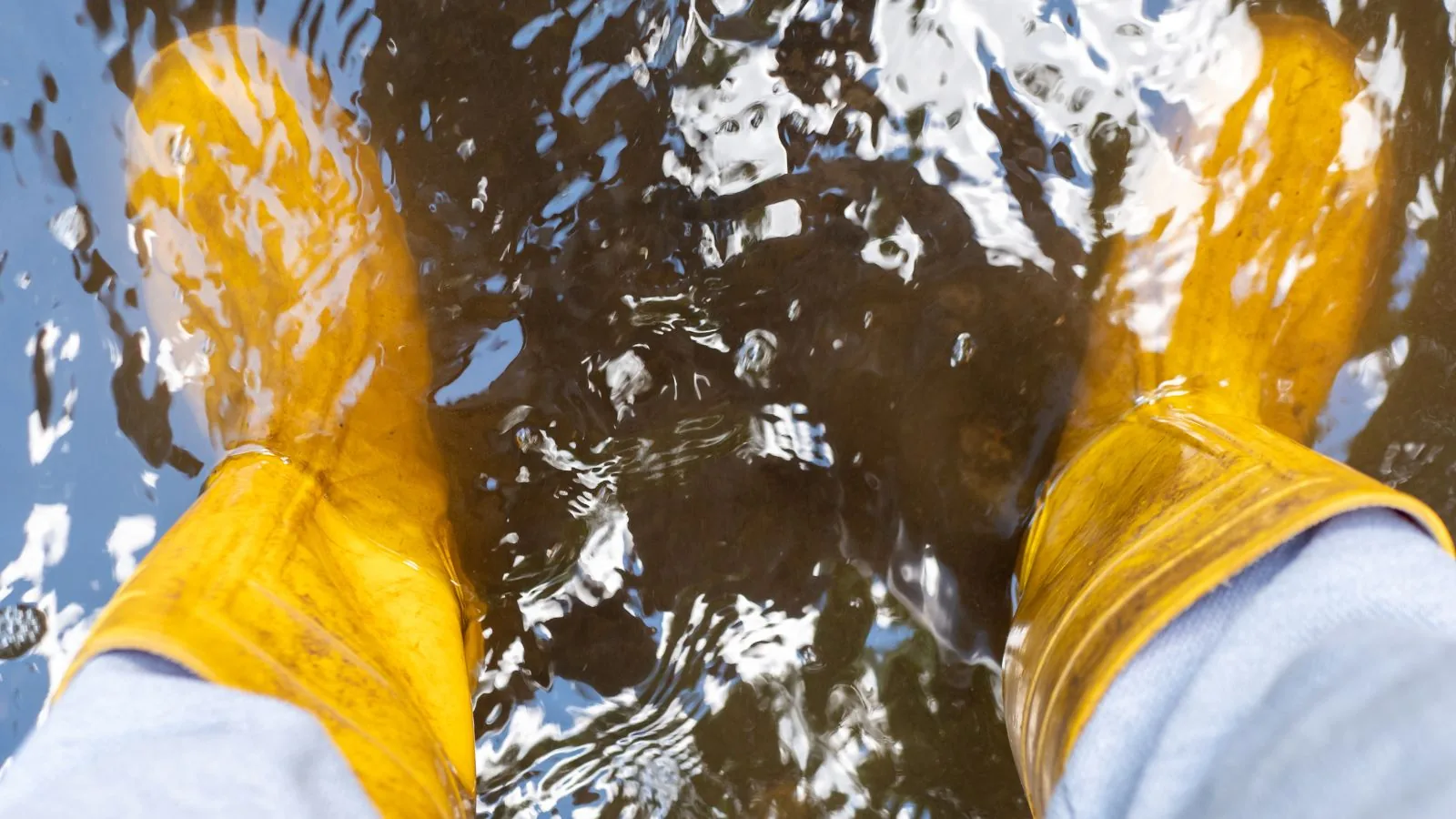
Storm damage is often decided before the storm. Gutters that drain away from the house, a roof in sound shape and a family that knows where the shut-offs are can cut a loss down. This checklist is meant to be done on a dry weekend, not in the rain.
Outside the house
- Clean gutters and downspouts so water flows freely
- Extend downspouts several feet from the foundation
- Check that soil slopes away from the walls
- Clear storm drains and low spots near the house
- Trim limbs that hang over the roof
- Check the roof for lifted shingles, damaged flashing and worn seals
Water that collects against a foundation is the usual way ground water reaches a lower level. Moving it away is far less work than drying a basement.
Inside the house
Test the sump pump if you have one by pouring water into the pit and watching it run. Check the discharge line, and ask an electrician about a battery backup if power loss is a concern. A pump that works on a dry day can fail when the power drops in a storm.
Know where the main water shut-off is and test that it turns. Know where the electrical panel is and keep a flashlight nearby. Move valuables and important papers away from the lowest rooms.
Storm water in the house?
Call the 24/7 line now.
Insurance and paperwork
- Read your policy and note what it says about wind, water and flood
- Ask your agent whether a flood policy makes sense, keeping in mind the waiting period
- Photograph or video each room and your valuables for a home inventory
- Store copies of the policy and the inventory in the cloud or off site
- Keep your agent's phone number and the claims line where you can find them
A home inventory is the document owners most often wish they had. It is far easier to make it on a calm day than to reconstruct it afterward.
Know the kind of water you might face
| Event | How water arrives | What it usually means for the house |
|---|---|---|
| Roof opening in wind | Through the roof or flashing | Ceilings, insulation and upper floors |
| Heavy rain and poor grading | Through walls or floors at ground level | Lower levels and crawl spaces |
| River or creek overflow | Rises from outside | Flood damage, which needs flood coverage |
| Power failure | Sump pump stops | Basement water that was controlled before |
Our pages on storm water damage cleanup and basement water damage cleanup explain what follows each of these events.
During and after the storm
- Stay out of rooms where water touches outlets, a panel or fixtures overhead
- Do not drive through flooded roads
- If power lines are down, call the utility or 911
- Photograph damage before you move anything, when it is safe
- Call your insurer, then call a restoration company if water is inside
Protecting what matters most
Decide in advance what you would carry out first. Papers, medications, electronics and photographs are the usual list. Keep them in a bin or bag that is easy to grab and stored above floor level. Put the bin where you can reach it without wading through a wet room.
Raise valuables off the floor in basements and garages. Even a few inches of elevation on shelves or pallets can save items from a shallow flood. Keep chemicals and fuel in sealed containers and well above the floor.
Power and utilities
- Know where the electrical panel is and how to turn off the main breaker if it is safe to do so
- Keep a flashlight and spare batteries in a known place
- Charge phones and backup batteries before a storm
- Know the phone numbers of your utilities and your insurer
- Keep a printed copy of key numbers in case the phone dies
If water reaches the panel, stay away and call the utility or 911. Never touch electrical equipment while standing in water.
Planning with the household
Talk through a plan with everyone who lives in the house. Agree on where to go, who to call and what to do about pets. A plan that everyone knows is far more useful than one only one person remembers.
A quick room-by-room check
| Room | What to check | Why |
|---|---|---|
| Garage | Floor drains, door seals, stored items on the floor | Water enters at the lowest door |
| Laundry | Hoses, drain pan, floor drain | A failure here floods quickly |
| Kitchen | Dishwasher and refrigerator lines | Frequent source of leaks |
| Bathrooms | Toilet supply lines, shutoff valves | Overflow and supply failures |
| Attic | Stains on decking, loose vents | Wind-driven rain entry |
| Lower level | Sump pump, window wells, wall bases | Ground water entry |
Go through each room once and write down what needs attention. Fix the items on your list before the next big storm, and check again after any heavy rain.
What to leave to professionals
Some storm tasks are better left to others. Roof repairs, tree removal near the house and electrical work around a panel are risky for anyone without training. Hire qualified people, and ask for a written description of what will be done and what it will involve.
Be careful of crews that go door to door after a storm offering quick repairs. Ask for details, check references, avoid paying in full up front and call your insurer before you sign anything. A rushed decision after a storm is the one most people regret.
For water that has already entered the house, a restoration company handles extraction and drying, and your insurer handles coverage questions. Keep the two roles separate in your mind.
Preparing in Braselton
The town's 2020 plan shows FEMA-mapped floodplains beside the Mulberry River and its tributary streams, with wetlands around the river and Duncan Creek. The FEMA map service center will show whether your address falls in a mapped area.
Ready Georgia, the state's preparedness program, publishes storm and emergency planning guidance for households. Neighbors in Hoschton and Flowery Branch, which sits on Lake Lanier, use the same advice, and the local picture changes with each address.
If a storm does get in, stop the source if you can do it safely and call the line. It answers around the clock.
Questions people ask
What should I do first to prepare for storm season?
Clean gutters, extend downspouts, check grading and the roof, and test the sump pump if you have one.
Does homeowners insurance cover flood in Georgia?
Standard policies leave flood out, the state insurance commissioner warns, so ask your agent about a separate flood policy.
Where do I check flood maps for Braselton?
Use FEMA's map portal for your address.
Where can I find state preparedness guidance?
Ready Georgia publishes household preparedness advice.