
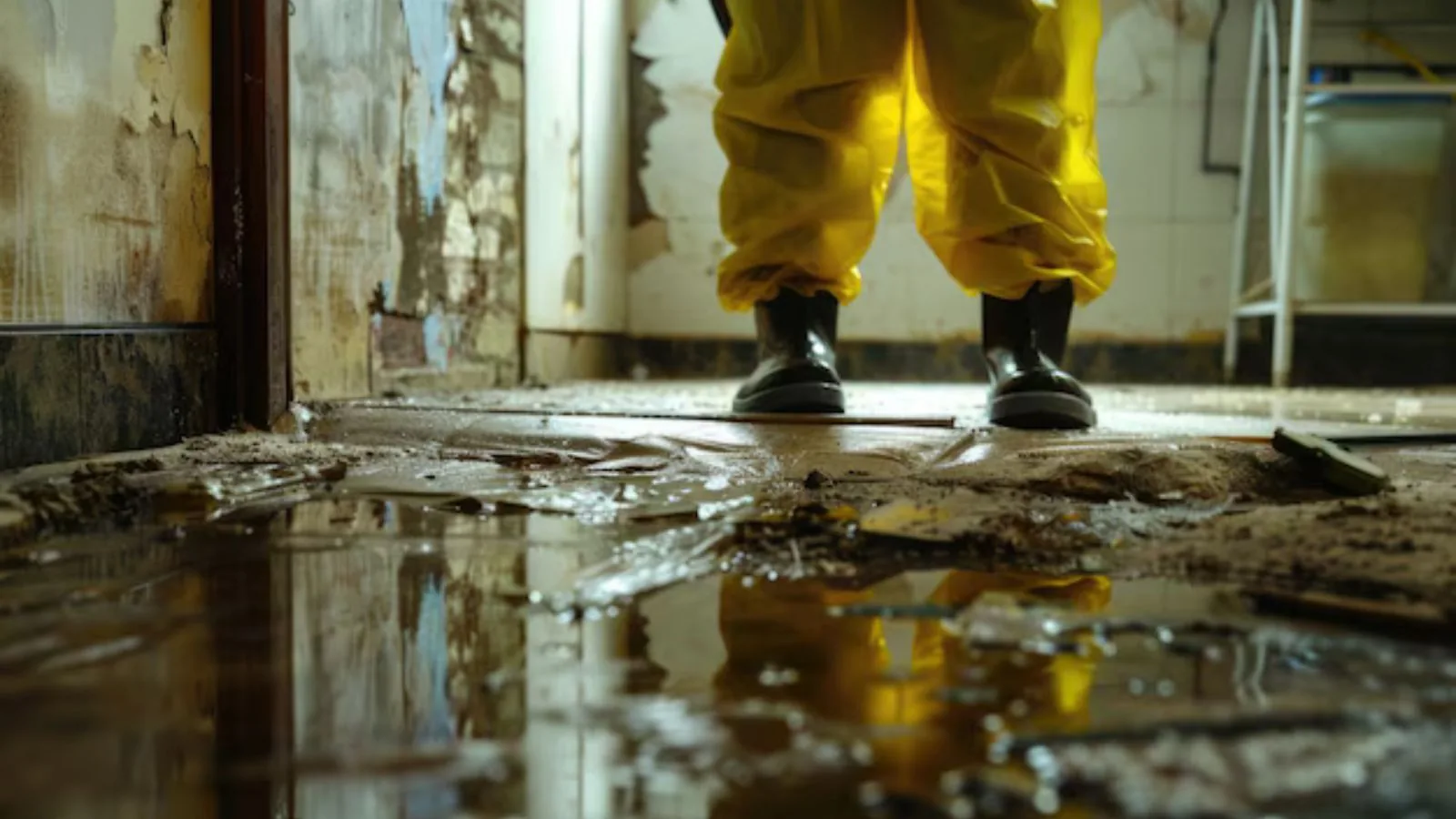
A musty smell after a leak is a sign that something is still damp. Air fresheners and candles mask the smell and leave the cause in place. Removing the odor for good means finding the wet material, drying it or removing it, and cleaning what remains.
This guide is about odor after a water event. It does not replace testing or advice from a specialist if you think you have a larger moisture or air quality problem.
Why the smell appears
Musty odors come from microbes that thrive in damp organic material, and from the gases they release. Wet drywall paper, carpet pad, wood framing and insulation can all feed them. The smell is strongest in closed spaces, because the air there does not move.
Water that was not dried properly is the usual cause. Surfaces can feel dry while the material behind them stays damp, which is why a house can smell after a leak that was apparently cleaned up.
Trace the smell to its source
- Walk the house when it has been closed for a while and note where the smell is strongest
- Check under sinks, behind the washer and around the water heater for dampness or stains
- Smell closets on exterior walls and the spaces under stairs
- Look at the air handler, its drain pan and the ceiling below it
- Check the crawl space or basement if the house has one
- Press on baseboards, drywall and flooring to feel for softness
A moisture meter confirms what your nose suggests. Readings on the wall or floor will show where water remains, and a thermal camera can show cool damp areas behind a surface.
Damp spot you cannot find?
Call the line and describe the smell.
What helps and what does not
| Action | Effect | Notes |
|---|---|---|
| Air freshener or candles | Masks odor | Leaves the source in place |
| Opening windows | Helps in dry weather | Can add moisture in humid weather |
| Running a dehumidifier | Lowers humidity | Does not dry a wet wall cavity alone |
| Removing wet pad or insulation | Removes the source | Better after readings |
| Cleaning hard surfaces | Removes residue | Does not fix hidden moisture |
The strongest fix is physical. Wet materials that cannot be dried are removed, and the rest is dried with air movement and dehumidification. The structural drying page explains how that works.
Carpet and soft materials
Carpet and pad hold odor, and pad is often the first thing to go. If the carpet was wet, lifting a corner and checking the pad and the subfloor tells you a lot. The page on carpet water damage covers when carpet can be saved.
Furniture, mattresses and clothing also hold smell after a loss. Washable items can be cleaned. Items that cannot be dried properly may need to be discarded.
When the smell is more than damp
A sewage smell is a different matter and a contamination issue. Treat it as such and see the sewage backup cleanup page. A strong smell of gas is an emergency, and you should leave and call the gas utility or 911.
If you see visible growth, the area may need a specialist who handles that kind of work. This site does not offer mold remediation, so for visible growth ask a company that does, and keep the source dry in the meantime.
Prevent the smell from returning
- Fix leaks promptly and dry the area completely
- Run exhaust fans in bathrooms and ventilate laundry rooms
- Keep indoor humidity under control and check it with a hygrometer
- Clean the air handler drain and replace filters on schedule
- Keep gutters and downspouts clear so water moves away from the foundation
Hidden places that hold odor
Odor often lives in places no one looks. The cavity under a tub, the back of a vanity, the base of a wall behind a refrigerator and the space above a drop ceiling all stay damp after a leak. Pull out removable panels and look with a flashlight before you decide the source is gone.
Ducts can carry smell through a house. If the odor comes from vents when the system runs, the air handler, its drain pan or the ductwork may be damp. An HVAC technician can check the equipment, and a restoration crew can check the nearby building materials.
Cleaning after the source is dry
- Wash hard surfaces with a household cleaner and let them dry fully
- Launder washable fabrics in hot water if the label allows
- Replace the air filter after drying is finished
- Run the system and the dehumidifier while you monitor humidity
- Check again after a few days for any return of the smell
If the smell returns, moisture is probably still present. Go back to the meter and look again rather than adding more cover-up.
When to call for help
Call a restoration company if the smell is strong, if it covers a whole room or floor, or if you know water was left standing for days. Describe the source, the dates and where the smell is strongest. A crew can take readings and tell you whether materials are still wet.
Call a plumber if you suspect an active leak. Call an HVAC technician if the smell comes from vents. Each trade handles a different part of the problem, and sometimes more than one is needed.
If anyone in the house has asthma, allergies or other health concerns, ask a doctor about the effect of damp air. Do not rely on a web article for that question.
Local notes for Braselton homes
Most Braselton homes were built in the 2000s or later, per the town's 2020 plan. Newer houses are built to hold in conditioned air, so a damp spot can stay damp longer in a closed space than it would in a drafty older house.
If you are near a creek or low ground, such as parts of the Mulberry River corridor named in that same plan, a persistent smell in a lower level can point to water from the ground. Homeowners in Chestnut Mountain and Pendergrass ask the same question.
Questions people ask
Why does my house smell musty after a leak?
Material behind a surface is probably still damp. Find it with a meter and dry or remove it.
Will a dehumidifier remove the smell?
It lowers humidity, but it does not dry a wet wall or floor on its own. Wet materials may have to come out.
Does this company remove mold in Braselton?
No. This site does not offer mold remediation. It dries and cleans after water losses.
Is a musty smell in a basement common here?
It happens wherever lower levels get damp. Check for water from outside after heavy rain.