
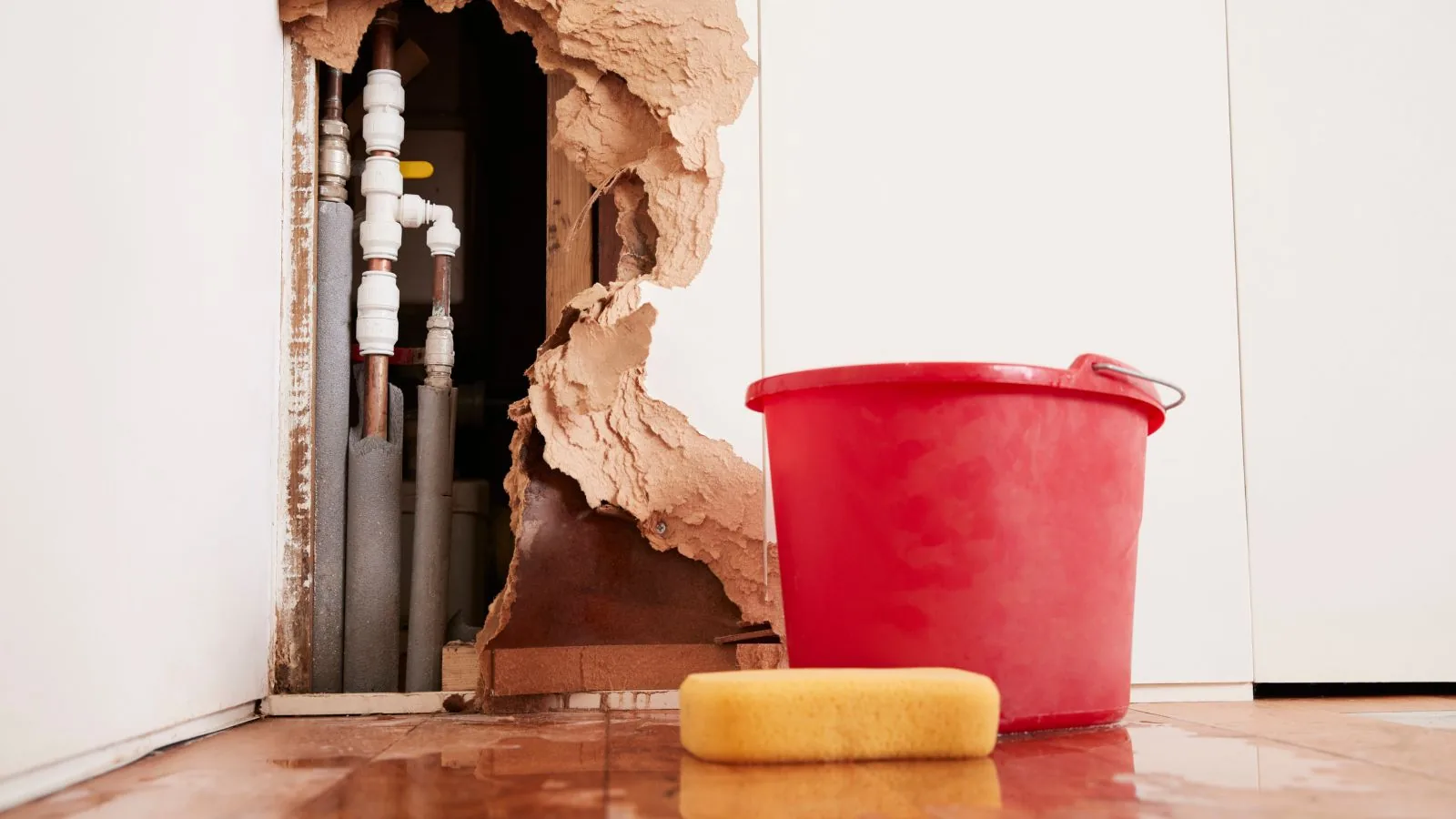
When a pipe lets go, the single most useful thing you can do is stop the water. That means knowing where the main shut-off is before you need it. Learn the location today, test the valve once and tell everyone in the house.
There are usually two valves
Most houses have a valve inside the house where the line enters, and a second valve at the meter near the street. The valve inside the house is yours to use. The valve at the meter belongs to the utility, and in many places only the utility may operate it, so check your local rules before you touch it.
Fixtures also have their own small valves. Under sinks, behind toilets and at washing machines you will find stop valves that shut off just that fixture. For a leak at one fixture, closing its valve is often all it takes.
Where to look for the main valve
| Home type | Common location | Tip |
|---|---|---|
| Slab house | Garage wall, utility closet or near the water heater | Follow the line from the heater |
| Crawl space house | Crawl space entry, or a closet where the line enters | Check an access panel |
| Basement house | Front wall of the basement, near the meter line | Look where the pipe comes through |
| Newer subdivision home | Garage, laundry room or a closet on an exterior wall | Check inside the first utility closet |
Look along the wall that faces the street. The pipe that enters the house on that side leads to the valve. Mark the spot with a tag so a family member or a guest can find it in a hurry.
Pipe already burst?
Close the valve and call the 24/7 line.
Types of valves
- A gate valve has a round wheel handle that turns many times. Turn it clockwise until it stops.
- A ball valve has a lever handle. A quarter turn so the lever sits at a right angle to the pipe closes it.
- A stop valve under a sink or behind a toilet has a small oval or round handle. Turn it clockwise.
Gate valves are old and can fail to seal or get stuck. Ball valves are more reliable. If yours is a gate valve that is hard to turn, a plumber can replace it with a ball valve.
How to shut off the main
- Locate the main valve and clear anything around it
- Turn it clockwise or move the lever until it is at a right angle to the pipe
- Open a faucet at the lowest level to drain the pipes and confirm that flow has stopped
- Turn off the water heater power or gas if the heater may run dry
- Note the time and take photos of the damage before you move things
Turning the valve slowly is kinder to the pipe. After the repair, open it slowly and check for leaks before you leave.
If the valve will not turn
Do not force it with a wrench, because a broken valve can make a small problem a large one. Try the meter valve if your utility allows it. If a leak is serious, call the utility or a plumber for help, and call a restoration crew to start removing the water.
Exercise your main valve once a year by closing it and opening it. Valves that are never used seize up, and it is better to find that out on a calm day.
After the water is off
Stopping the source is only the first step. Water already in the house keeps moving into floors, walls and insulation. The burst pipe water damage page and the water extraction page explain what happens next.
Teaching the household
Everyone who lives in the house should be able to find the main valve in the dark. Walk the family to it, let each person turn it off and on once and show them how to open a faucet afterward to relieve pressure. Children old enough to follow directions can learn it, and guests and sitters should be told where it is.
Tape a card near the valve with the direction to turn and the number of your plumber and utility. In a leak, people forget things they know well, and a card helps.
Turning the water back on
- Make sure the leak is repaired and fixtures are closed
- Open the main valve slowly
- Open a faucet at the highest level to let air out of the pipes
- Check the repair and nearby fixtures for drips
- Close the faucet when water runs steadily
- Check the water heater and restart it if you turned it off
Opening the valve slowly prevents a sudden surge that can stress old fittings.
Common mistakes with shut-offs
- Forcing a stuck valve until it breaks
- Shutting the valve but leaving the water heater on with no water supply
- Forgetting to open a faucet to drain pressure from the pipes
- Opening the valve quickly after a repair
- Never testing the valve until an emergency
Each is easy to avoid. A yearly test of the main valve and the fixture valves under sinks and behind toilets takes minutes and tells you which ones are stiff before you need them.
If a fixture valve is corroded or will not seal, replace it. A plumber can do it quickly, and it removes a weak point from the house.
Water service around Braselton
Town water customers are served by the Town of Braselton Water System. Because the meter and the line up to it belong to the utility, call the town's water office if the curb valve is the only way to stop a leak, and ask what the town allows homeowners to do.
Homes in Hoschton, Oakwood and other cities are served by different utilities, so the right number depends on the address on your bill.
Questions people ask
Where is the main water shut-off in a house?
Usually where the line enters the house, in a garage, utility closet, basement or crawl space, on the side facing the street.
Can I turn off the water at the meter in Braselton?
The meter belongs to the utility. Ask the Town of Braselton water office what it allows.
Which way do I turn a gate valve?
Clockwise until it stops.
What if I cannot find the main valve?
Call the utility, and call a plumber. A crew can start extraction once the water is controlled.