
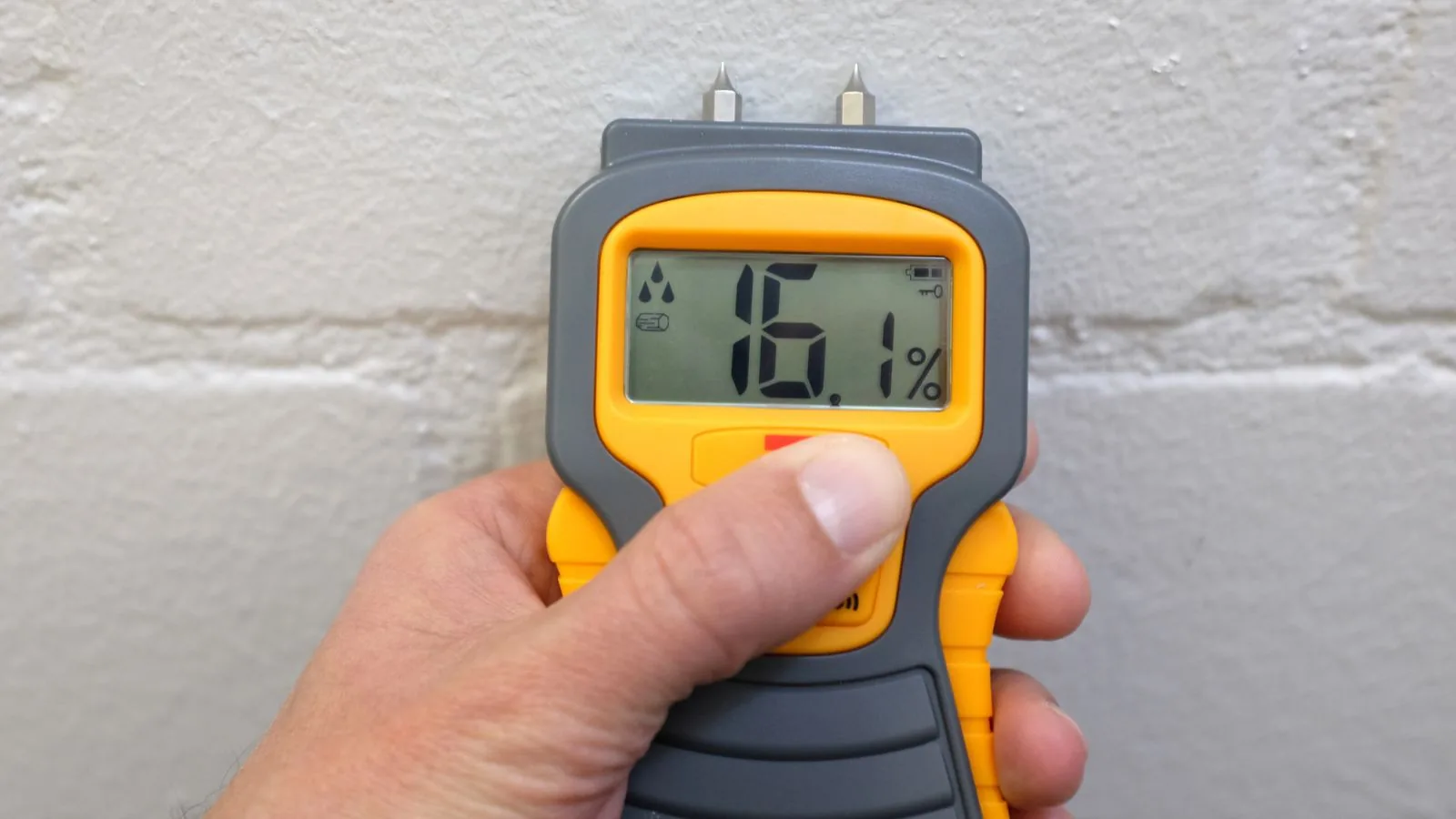
There is no single answer to how long water damage takes to dry. A small, clean leak caught at once can dry in a few days, and a large loss in thick materials can take longer. The honest answer is that drying is finished when readings say it is, not when a calendar says so.
What sets the schedule
- How much water there was and how long it sat
- What the water touched, since dense materials hold moisture longer
- How many layers the water passed through, such as flooring over subfloor
- Air conditions in the house, including temperature and humidity
- How quickly standing water was removed
- How many air movers and dehumidifiers are placed, and where
The starting point matters most. Water removed in the first day leaves far less to dry than water left for several days.
How different materials behave
| Material | How it holds water | Drying notes |
|---|---|---|
| Drywall | Absorbs through the paper and gypsum | Can dry when clean water is caught early, or be removed if it crumbles |
| Carpet and pad | Pad holds water | Pad is often removed, carpet may be dried |
| Solid hardwood | Absorbs slowly, releases slowly | Needs controlled drying to avoid cracking |
| Engineered flooring and laminate | Swells at seams | Often cannot dry back to shape |
| Framing and subfloor | Dense and slow | Needs readings to confirm a dry goal |
| Concrete slab | Holds moisture for long periods | Slowest to reach a dry reading |
Each material has its own dry goal. A crew compares your readings to a reference reading from unaffected areas of the house, which is why a dry spot elsewhere matters.
Need drying started?
Call the 24/7 line and describe the loss.
What the equipment does
Air movers push air across wet surfaces so water can evaporate. Dehumidifiers remove the moisture from the air so evaporation can continue. Specialty drying systems pull water from floors and wall cavities. The structural drying page explains each tool.
Equipment placement matters as much as the number of machines. A fan pointed at the wrong wall dries nothing, and a dehumidifier in a room with open windows works against the weather.
How readings prove the job is done
- Initial readings map the wet area and set the baseline
- Daily readings show whether materials are drying at a steady rate
- Equipment is moved as areas dry
- Final readings confirm that each material is at its dry goal
- A written record keeps the numbers for you and for your insurer
If a company removes equipment without final readings, ask for them. A surface can feel dry while the wood behind it is not.
Why rushing is a mistake
Pulling equipment early leaves moisture behind. That moisture can swell trim, warp floors and cause odor, and it can show up weeks later as a new problem. Dry means dry to a number, not to the touch.
Slow drying has a cost too. Equipment that runs for days adds noise and electricity use, and it makes living in the house harder. A crew that explains the schedule and shows readings is helping you plan.
What you can do while it dries
- Keep equipment on and do not move or unplug it
- Keep doors and windows closed unless the crew says otherwise
- Keep children and pets away from equipment and cords
- Report new smells, stains or sounds to the crew
- Keep a record of dates and any changes
Why the first day matters
The first day sets the tone for the whole job. Water that is removed quickly never has time to soak deep into framing and subfloor. Each additional day adds both the amount of water in materials and the number of days needed to remove it. This is why a quick call usually shortens the drying schedule.
The crew's plan on day one also sets the equipment. Too little equipment means a long, slow job, and too much wastes electricity. A good plan starts with an honest estimate and adjusts as readings come in.
Signs drying has stalled
- Readings stop dropping over two visits
- A material that should have dried is still wet
- A musty smell grows instead of fading
- The room feels humid when the equipment runs
- New staining appears near an area that was supposed to be dry
When readings stall, the crew checks for a source that was missed, adjusts equipment or opens a wall cavity. A stalled job is a reason to ask questions, not to wait.
Planning your own life around a drying job
Drying equipment is loud and uses power, so plan for it. Many owners stay in the house with the equipment running, and others choose to stay elsewhere for a few days. Ask the crew about noise, temperature and any rooms you can use, and ask how pets should be handled.
Plan for the visits as well. A crew that returns daily for readings needs access to the house, so decide who will be home or how to give access. Missed visits can slow the schedule and delay the end of the job.
If you work from home, tell the crew which room you need and which hours work well. A little planning makes a drying job far easier to live with.
Seasons and drying
Outdoor weather affects indoor drying. Humid summer air makes it harder for materials to give up water, and dry winter air helps. Crews adjust equipment to the conditions, and they may ask you to keep doors and windows shut so that the controlled environment works as planned.
Air conditioning also matters. A house that is kept cool and closed dries differently from one that is open, so follow the crew's advice about the thermostat while equipment runs.
Drying in Braselton homes
Because most homes in town are newer construction, as the 2020 comprehensive plan shows, expect engineered flooring and long runs of drywall, and those materials set the pace of a drying job.
Homes with a slab foundation can hold moisture in the concrete for a long time, so a crew measures there too. The same readings apply to jobs in Hoschton and Flowery Branch. If water has just arrived, the water extraction page covers the first step.
Questions people ask
How many days does drying take?
It commonly takes several days, and it varies with the water, the materials and the equipment. Readings decide when it is done.
How do I know my house is dry?
Final moisture readings that match the dry goal for each material, recorded in writing.
Why does concrete take so long?
Concrete holds moisture deep inside and releases it slowly.
Can I speed up drying with open windows?
Not reliably. Humid air outside can slow drying, so follow the crew's advice.