
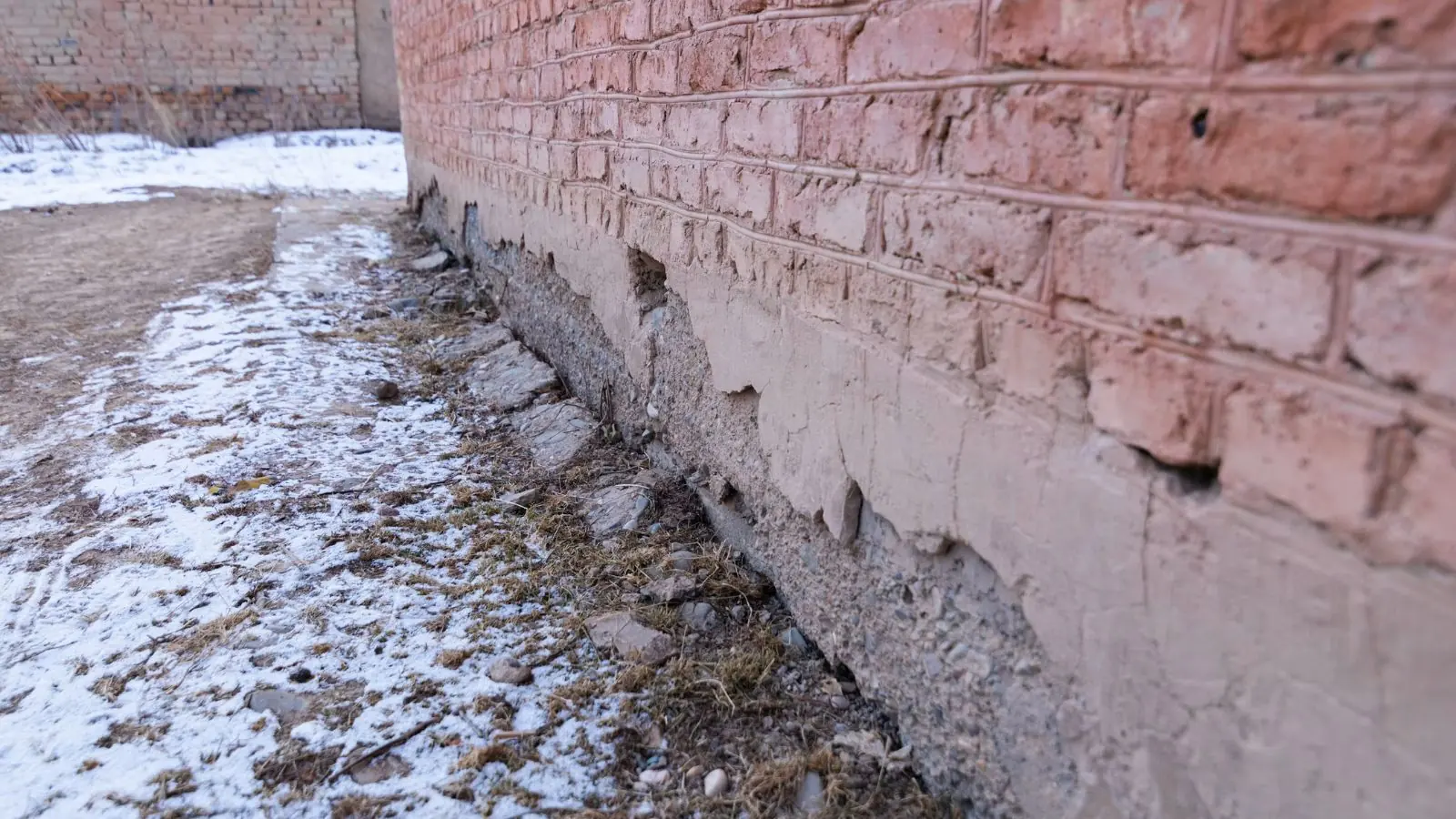
Buyers who check a house for water damage before closing save themselves a lot of trouble. Water problems leave clues in stains, smells, textures and paper trails. This walkthrough is meant to complement a professional inspection, not replace it.
Hire a qualified home inspector, and ask whether a moisture meter or thermal camera will be used. Nothing below is a substitute for that inspection.
Outside the house first
- Look at the grading, and whether soil slopes toward the house
- Check gutters and downspouts for damage or poor drainage
- Look at the foundation for cracks, stains and efflorescence, a white powder that marks water movement
- Look at the roof for patched areas and lifted shingles
- Check the lowest windows and window wells for staining
Exterior clues tell you what water has been doing around the house, and they often point to what is happening inside.
Inside: ceilings and walls
Look at ceilings for stains, especially below bathrooms and under the roof. Rings with darker edges suggest repeated wetting. Look at walls for bubbling paint, warped trim and patches that do not match the rest. A fresh coat of paint in one spot is worth asking about.
Press gently on baseboards and drywall near sinks and exterior walls. Softness is a sign of water. Check the corners of rooms and the spaces behind doors, where staining often hides.
Wet area in a house you own?
Call the line and describe what you see.
Floors
Look for cupping or buckling in wood and laminate, and for lifted seams and discoloration. Check whether the floor feels springy or soft near the dishwasher, refrigerator, washing machine and tubs. Carpet that feels damp or smells musty may hide trouble underneath.
Where water systems live
| Place | What to look for | Why it matters |
|---|---|---|
| Under sinks | Stains, swollen cabinet bases, corrosion | Slow leaks hide here |
| Water heater | Rust, a stained pan, drips | Tanks fail with age |
| Air handler and drain line | Stains below, rusty pan | Condensate leaks |
| Laundry area | Floor staining, old hoses | Hose failures are common |
| Attic | Stains on decking, wet insulation | Roof leaks |
| Basement or crawl space | Damp walls, odors, efflorescence | Ground water entry |
A moisture meter is a small tool and a valuable one. If your inspector does not bring one, ask whether one can be used.
Smell and sound
Stand in the house with the windows closed for a few minutes. A persistent musty smell suggests moisture somewhere. Turn on the water in each fixture and listen for sounds of running water in walls when everything is off.
Records and questions for the seller
- Has there been any water damage, and what caused it
- Were repairs done, by whom, and are there records
- Were permits pulled for any rebuilt work
- Has an insurance claim been made for water damage
- Do any warranties cover the repairs
A seller who is open and has records is a good sign. A seller who cannot say what happened behind a repaired wall is a reason for a closer look.
If you find something
Do not panic. A past leak that was fixed and dried properly is not a reason to walk away. Ask for records, get readings and ask a specialist to assess. If the damage is active or the source is unknown, the cost to fix it belongs in the negotiation. The structural drying page and the wall and drywall damage page explain what remediation involves.
Questions for the inspector
Before the inspection, tell the inspector you are concerned about water. Ask whether moisture readings will be taken on walls and floors and whether the attic and crawl space will be entered. Ask how the report will describe any signs of past water, because the wording can matter later.
Attend the inspection if you can. Seeing a stain or a soft spot yourself, and hearing the inspector explain it, is more useful than reading a line in a report. Take photos of anything you want to follow up on.
Following up on a finding
- Ask the seller for repair records and the name of whoever did the work
- Ask a plumber to check a suspected source
- Ask a restoration company for moisture readings if anything looks active
- Ask your agent how to handle a repair request in the contract
- Decide whether to repair, renegotiate or walk away before the deadline
Contract deadlines matter. Find out how long you have for inspections and responses, and do not let a follow-up run past them.
Hidden clues that are easy to miss
A few clues are easy to overlook. Fresh caulk in one bathroom only, a new section of baseboard, a rug in an odd place or furniture arranged to cover a spot can all hide something. None proves a problem, but each is a reason to look more closely.
Check the water heater closet and the space under stairs, where leaks often go unseen. Open the access panel to the tub plumbing if there is one. Look at the underside of the kitchen sink and the cabinet floor for swelling or discoloration.
Finally, check the attic access and the garage ceiling below any upstairs bathroom. Stains there can show a leak that has been running for some time.
Buying in and around Braselton
The 2020 plan dates roughly seven in ten Braselton homes to the 2000s or later. In newer neighborhoods, ask about builder warranties and any past plumbing or roof repairs, and whether they were documented.
Look up the address on the flood map tool on FEMA's site, because the town plan maps floodplains beside the Mulberry River. Ask the building office that covers the address for permit history. Buyers in Hoschton and Oakwood deal with their own city offices.
Questions people ask
What are the main signs of water damage when buying?
Stains, bubbling paint, soft baseboards, cupped floors, musty smells and efflorescence on foundations.
Should I ask for a moisture meter at inspection?
Yes. Ask whether the inspector will bring one and a thermal camera.
How do I find out if a Braselton home is in a floodplain?
Use the official FEMA flood map lookup and ask your agent.
Is a past leak a reason not to buy?
Not by itself. Ask for records and readings, and have a specialist assess what you find.